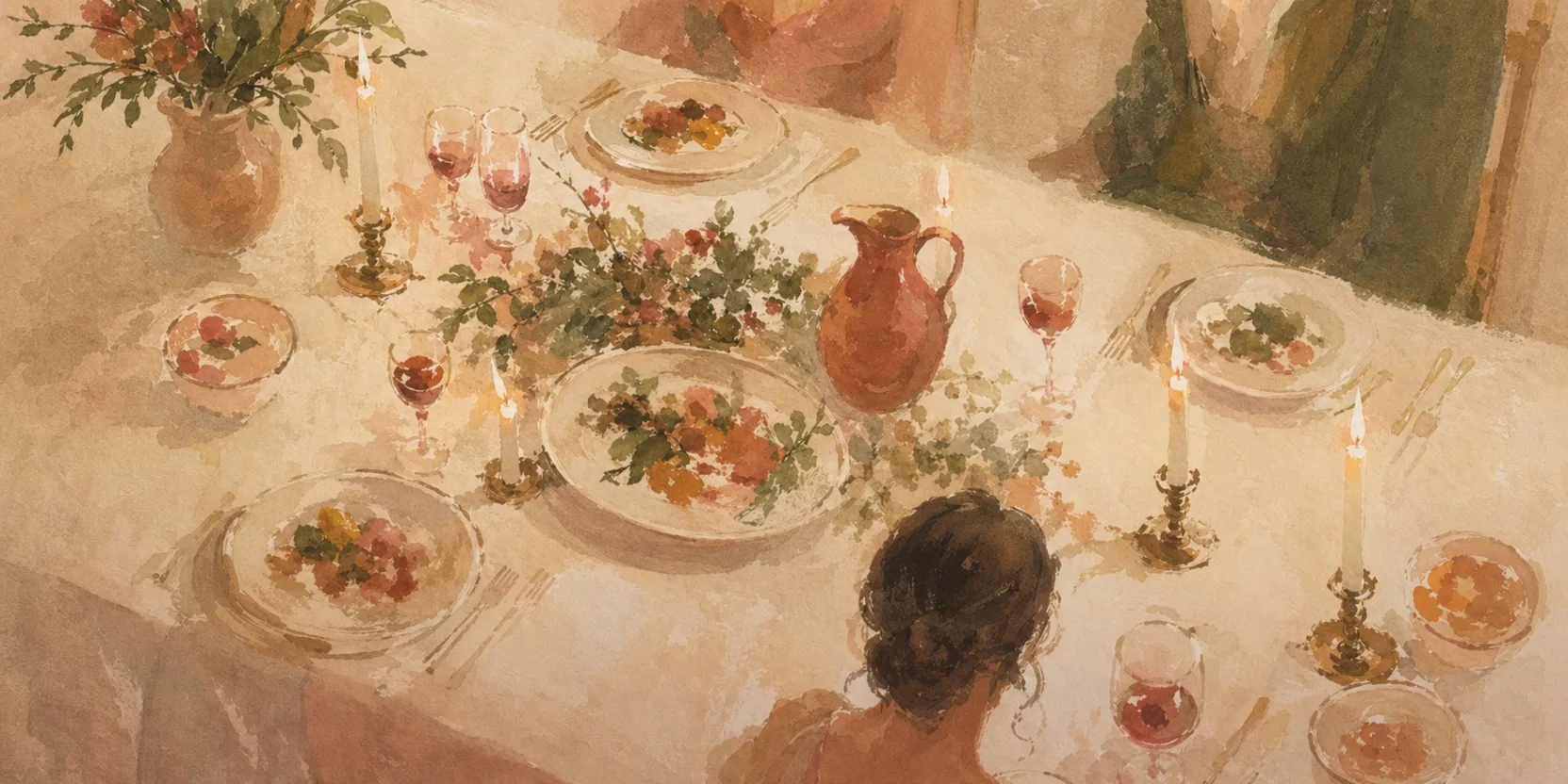

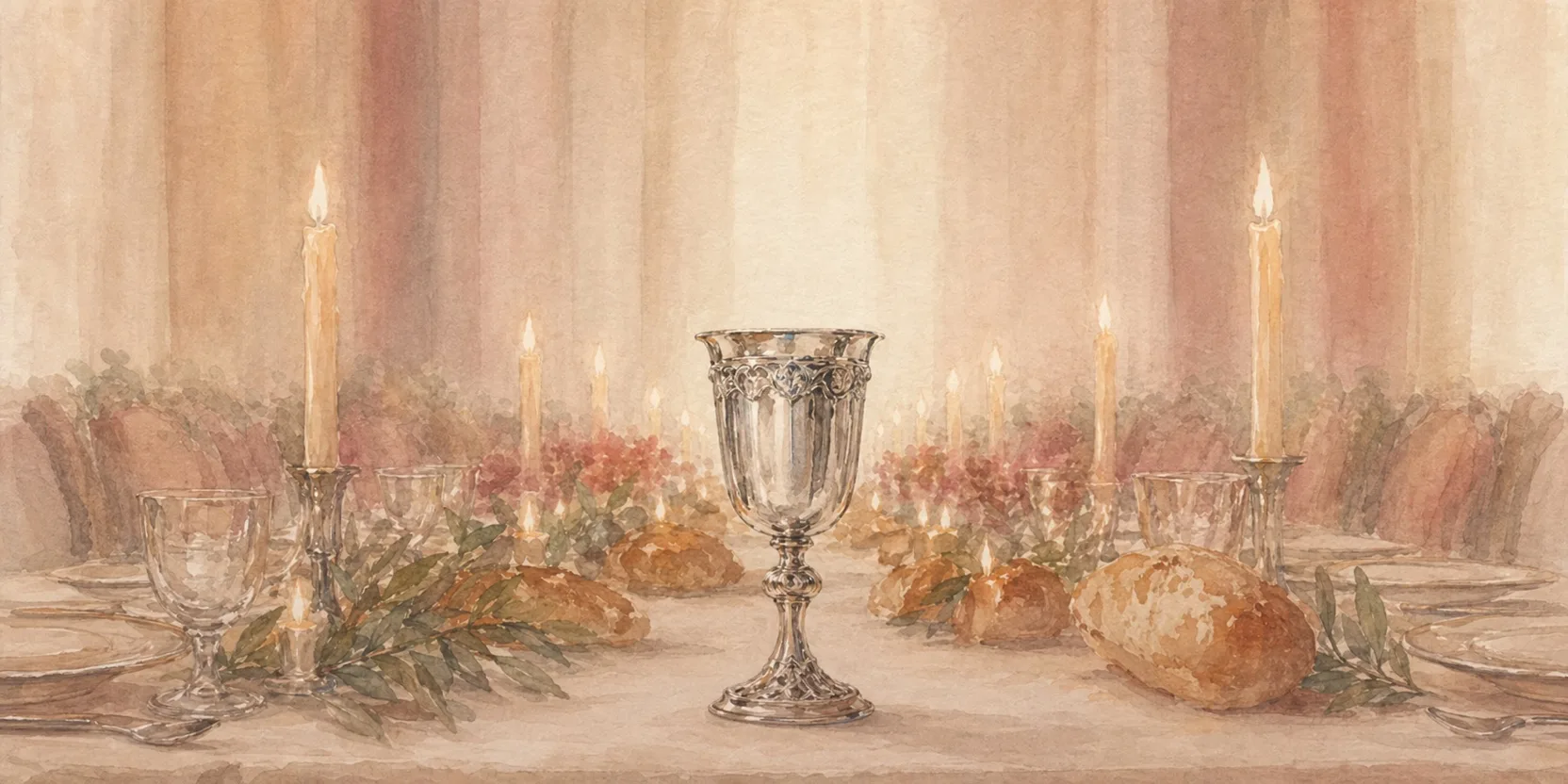

I grew up watching my grandfather be a tamada. Two or three times a year, at every supra of any size in our family, he sat at the head of the table and ran the evening. I didn’t know the role had a name until I was about ten. To me he was just babua (grandpa), and the supra was something he made happen.
If you’re a foreigner about to attend your first Georgian supra, here is what a tamada actually is, what they do, and why the role still matters.
The role, simply
The tamada (თამადა) is the toastmaster. They are the person designated by the host (or, often, the host themselves) to run the toasting through the evening. They sit at the head of the table. They open the supra with the first toast. They decide which subjects get toasted, in what order, with what weight. They control the rhythm of the meal: when to slow down for a serious toast, when to lift the mood, when to gently steer a guest toward giving a counter-toast, when to bring the evening to a close.
The role is partly ceremonial, partly hospitality, and partly performance. A great tamada is someone you remember. A weak tamada makes the evening feel shapeless.
Why the role exists
Outside of Georgia, dinner parties don’t usually have a single emcee. Conversation drifts. People make individual toasts when the mood strikes. There is no orchestration.
A Georgian supra is structured differently. Toasting is not optional or sporadic. It is the spine of the evening. Each toast has a subject (peace, family, the dead, the country, women, the host) and an order. Without someone whose job is to keep that structure moving, the evening would drift the way a Western dinner does.
The tamada solves that. They keep the toasting cycle running, and the meal stays together as one experience instead of breaking into smaller conversations. There’s a real social engineering at work in the role, even if no one talks about it that way.
What the tamada actually does
A traditional tamada has several jobs across an evening:
Open the supra. The first toast is theirs. It’s almost always to peace (mshvidobas) or thanks for the gathering. This sets the tone.
Sequence the toasts. Family, ancestors, absent loved ones, children, close friendships, the country, women, the host. Order matters. A skilled tamada feels the room and adjusts the sequence to the moment.
Give long toasts. A tamada toast is not a short cheer. Sometimes it’s a paragraph. Sometimes it’s ten minutes. The good ones are personal, specific, slightly unexpected.
Invite counter-toasts. Once the supra is rolling, the tamada will turn to a guest and say something like “now you toast.” This is part hospitality, part minor stress test. As the foreigner at the table, you may receive this invitation. It is a compliment.
Manage the wine. Watch how full glasses are, signal when to pour, decide when chacha makes its appearance toward the end.
Close the evening. The final toast, often elaborate, often emotional, is the tamada’s. The supra ends when they say it does.
Who gets to be tamada
Traditionally, the role is given to an older man, often the patriarch of the family or the most respected guest. In modern Georgia and especially in Tbilisi, this has loosened. I’ve seen great tamadas who were women. I’ve seen great tamadas who were the youngest at the table. The skills that matter are the same: you have to read the room, you have to be able to hold your wine through the whole evening without losing the thread, and you have to be willing to talk about something serious in front of a table.
That last skill is the hardest. The best toasts a tamada gives are not generic well-wishes. They are personal, specific to the moment and the people present. A toast at a wedding that names the small things about the bride that her grandmother would recognise. A toast to absent friends that mentions one of them by something they used to say. The tamada is the person who can make those toasts land.
What to do as a guest
A few rules that hold up:
- Don’t take the tamada’s seat at the table. Even if it’s empty when you arrive.
- Don’t toast yourself, ever. If the tamada hands you a toast, make it about someone else.
- Don’t compete with the tamada’s pace. They set the rhythm.
- If you’re called on to give a toast, keep it short, make it personal, and direct it at the host or the family. Modi, shens janmrtelobas gaumarjos (“let’s drink to your health”) is a safe minimum.
- Drink the toast you are part of, even if it’s just a sip.
If you’re a guest who has impressed the table, the tamada may invite you to give an alaverdi, a counter-toast that picks up the tamada’s theme and runs with it for a beat before passing the floor back. This is one of the higher honors a foreign guest can be given at a Georgian table. Take it seriously.
A small Georgian-language note
Some words you’ll hear circling the role:
- tamada (თამადა), the toastmaster.
- sadghegrdzelo (სადღეგრძელო), a toast (the formal speech, not the cheer). Pronounced roughly sah-dghe-grdze-lo (the consonant cluster grdz runs straight through, no vowel between). Don’t worry about saying it perfectly. It’s a beautiful word but a hard one for new learners.
- gaumarjos (გაუმარჯოს), the cheer that ends every toast. “To victory.” Said while glasses are raised.
- bednierebas (ბედნიერებას), “to happiness.” A common subject for a toast.
- mshvidobas (მშვიდობას), “to peace.” Almost always the first toast.
- tkvens janmrtelobas (თქვენს ჯანმრთელობას), “to your health.” Universal, and a good thing to learn early as a foreigner.
If you can offer one of those phrases when invited to toast, your tamada will smile and the table will warm up. Even a short attempt in Georgian transforms how the meal carries you.
Why the role still matters
You could argue the tamada is an old-fashioned thing in 2026. Long supras with formal toasting are less common in cities. Busy weeknight dinners are more common. But the role hasn’t faded. It has just narrowed. At weddings, holidays, family gatherings of any size, the tamada is still there, still running the evening.
That’s because the structure they enforce is still the structure that makes a Georgian supra what it is. A meal where everyone leaves having said something to each other, having drunk to people they love, having been part of an evening that had a shape.
I miss watching my grandfather do it. I think about him when I see a younger tamada take the chair and find their feet. The role passes. The table stays.