

If you have spent more than a day in Georgia, you have eaten khachapuri. If you have spent more than a week, you have eaten the wrong kind for what you wanted. There are five main regional types, and they are different enough that ordering “khachapuri” without specifying what you want is a small bet on the kitchen.
This is a short field guide. What each one is, what’s actually inside, and which one to start with.
What khachapuri actually is
Khachapuri is, very literally, “cheese bread”. Khacho refers to Georgian curd cheese, and puri is bread. The category is enormous, because almost every Georgian region has its own version. What stays constant: bread, cheese, butter, salt. What varies: the shape, the dough, the cheese, whether there’s an egg, and whether you are eating it with your hands or with a fork.
The five regional types
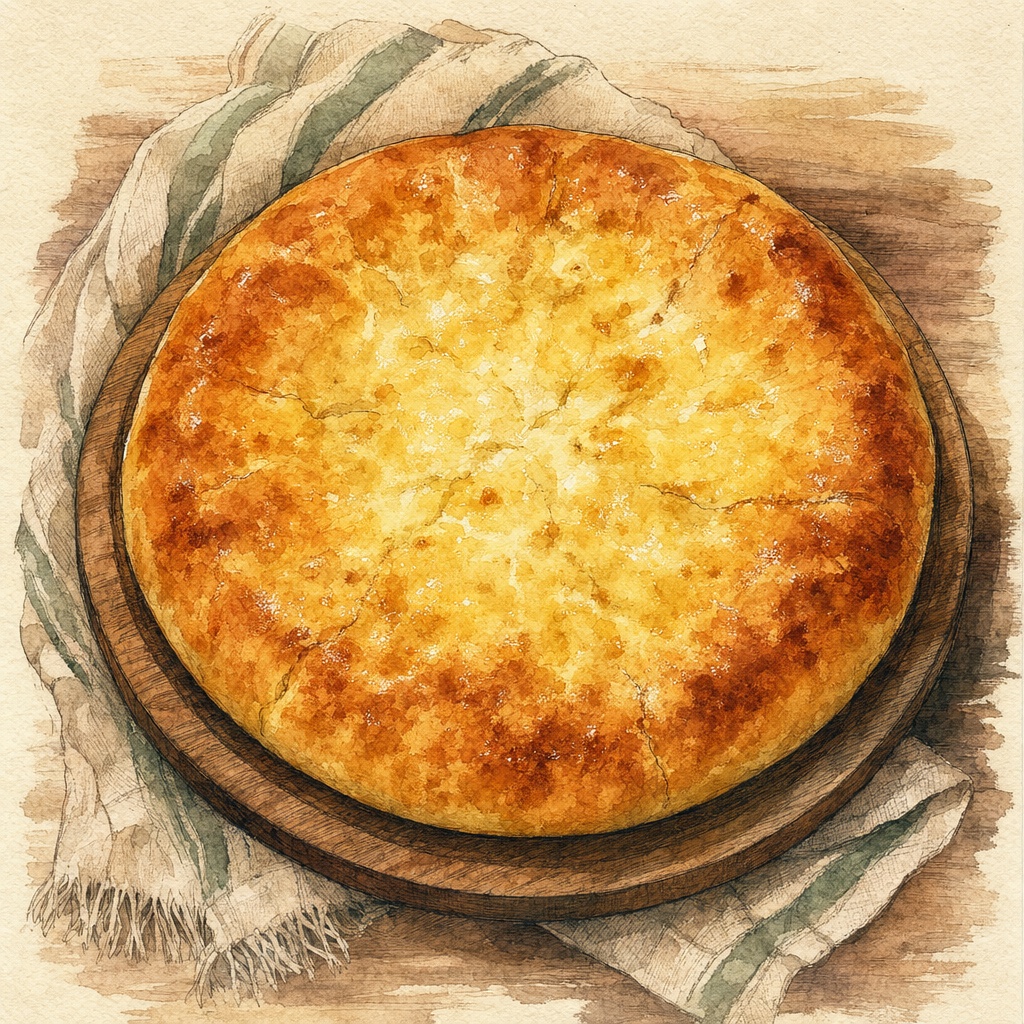
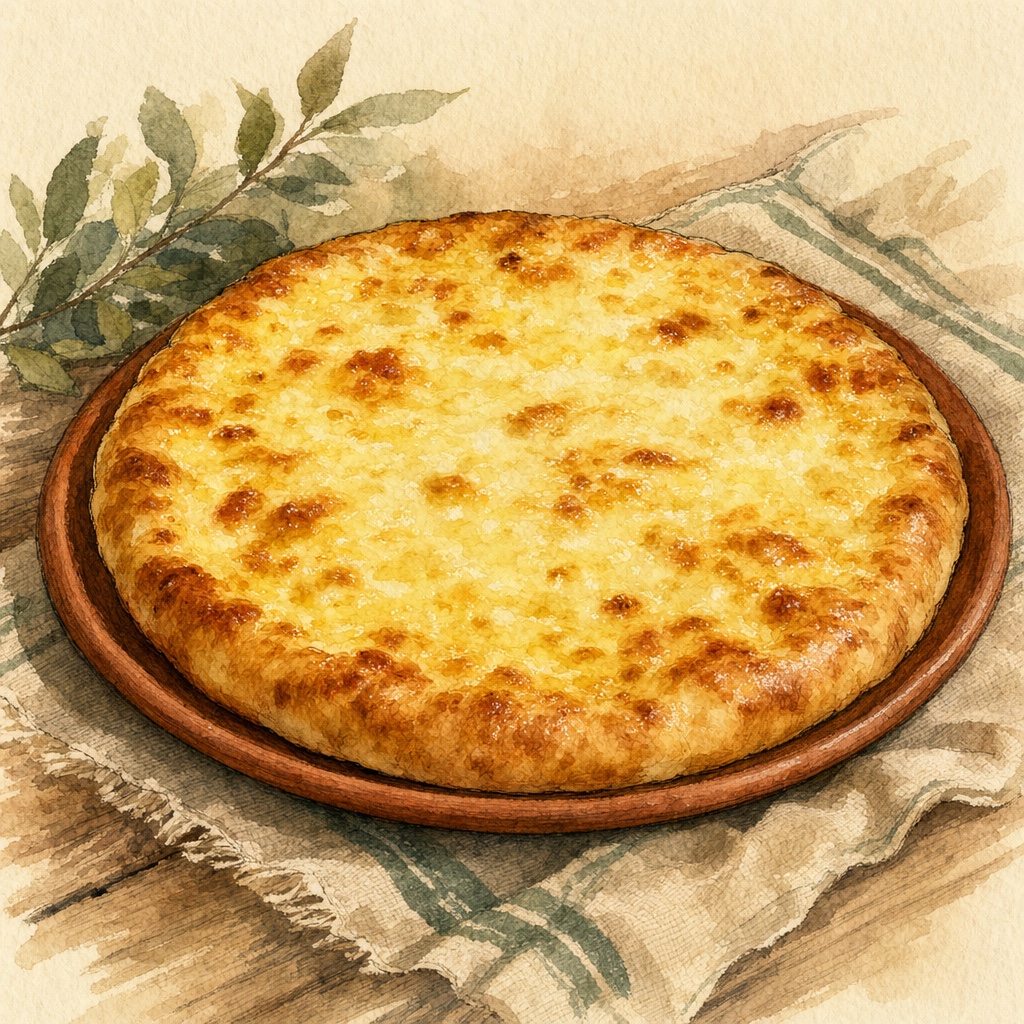
Imeretian (Imeruli). A round, flat, closed pie. Cheese tucked between two sheets of soft yeasted dough, sealed at the edges, baked, brushed with butter. The default in most of central and eastern Georgia. Mild, comforting, easy to share. This is the one to start with if you have never had khachapuri before.
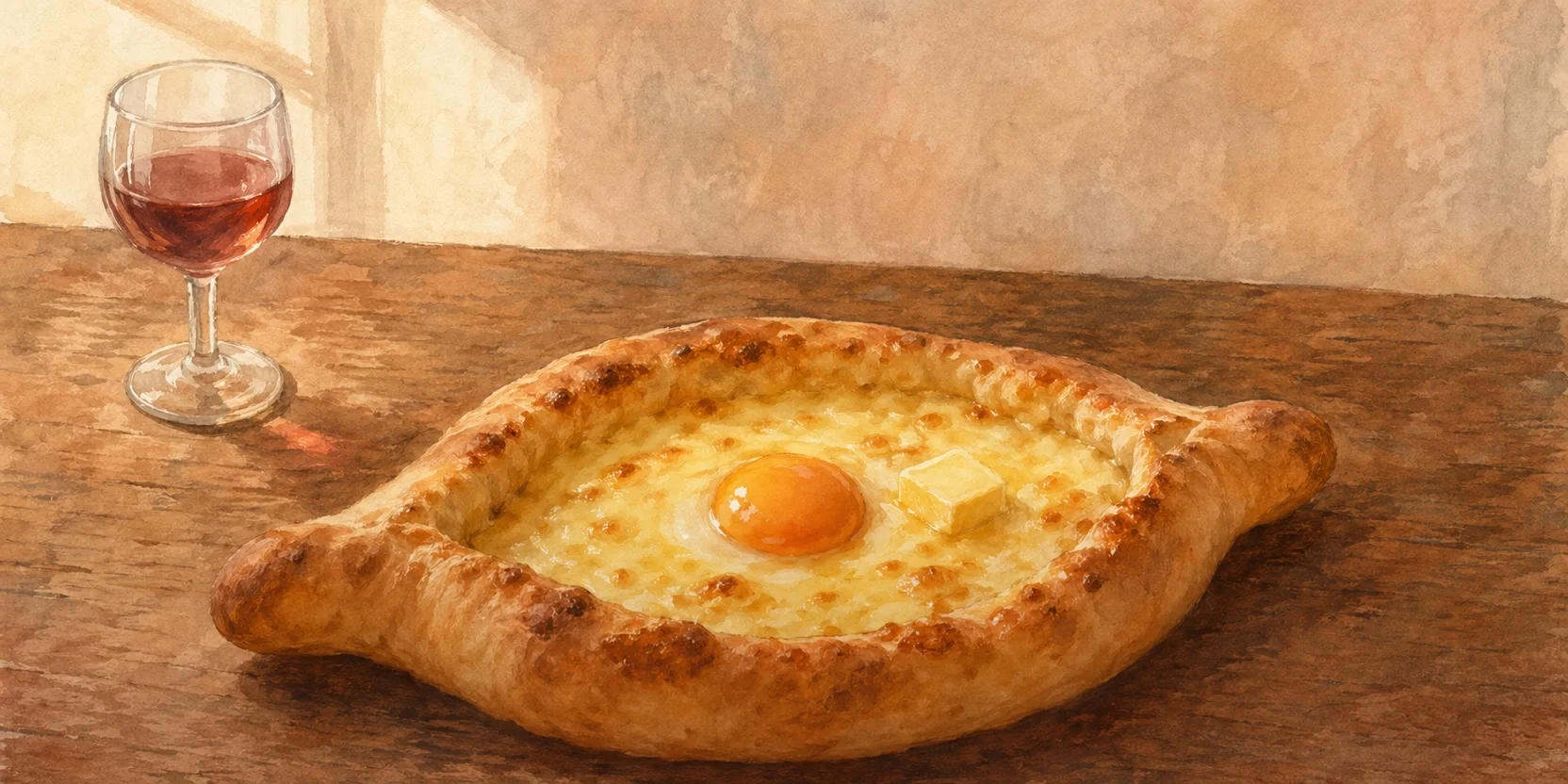
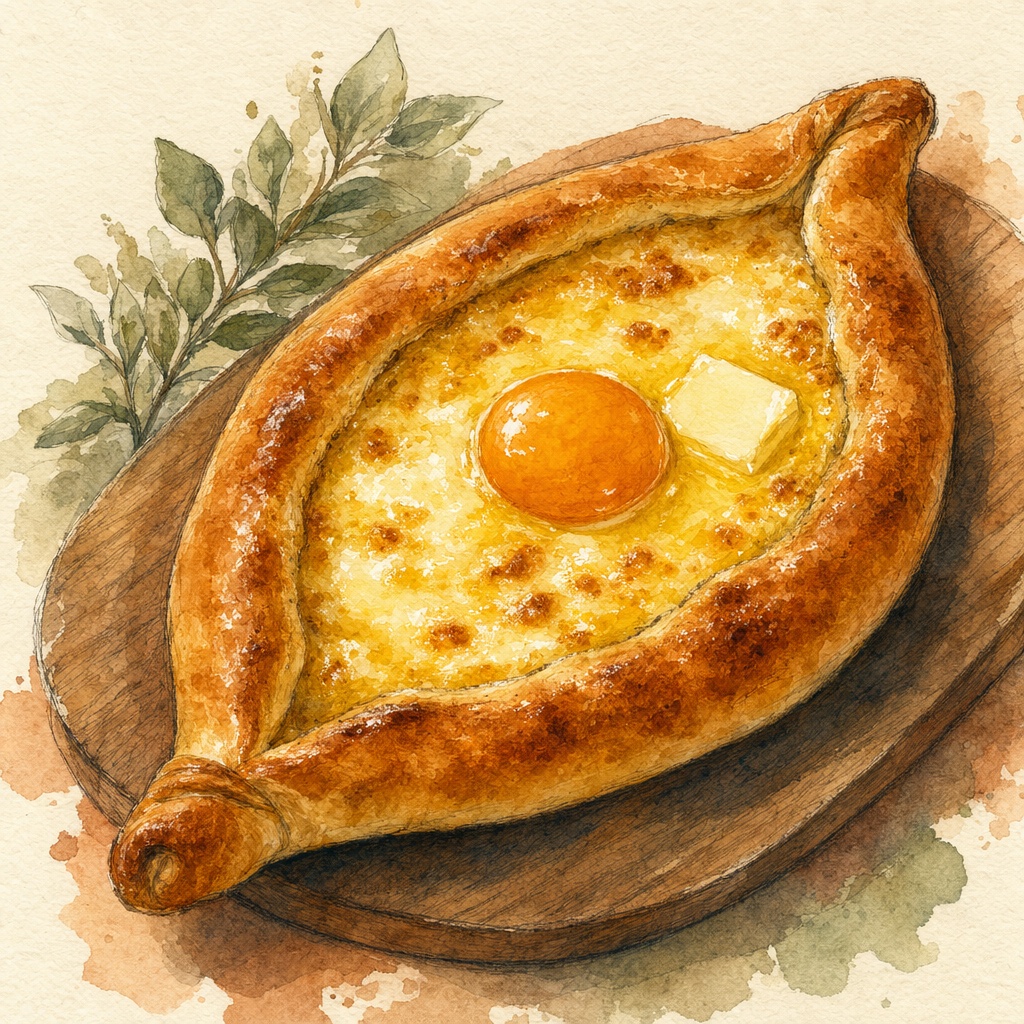
Adjarian (Acharuli). The boat-shaped one, from the Adjara region on the Black Sea coast. An open dough boat filled with melted cheese, with an egg yolk and a knob of butter dropped into the centre at the very end. You stir the egg and butter into the cheese with a fork, then tear off pieces of the bread “boat” and dip. Heavy, rich, theatrical. Usually shared. Order it once early in your time in Georgia for the experience.
Megrelian (Megruli). Imeretian’s louder cousin. Same closed-pie shape, but with a layer of melted cheese on top in addition to the cheese inside. From Samegrelo, in western Georgia. If you like cheese, this is the one.
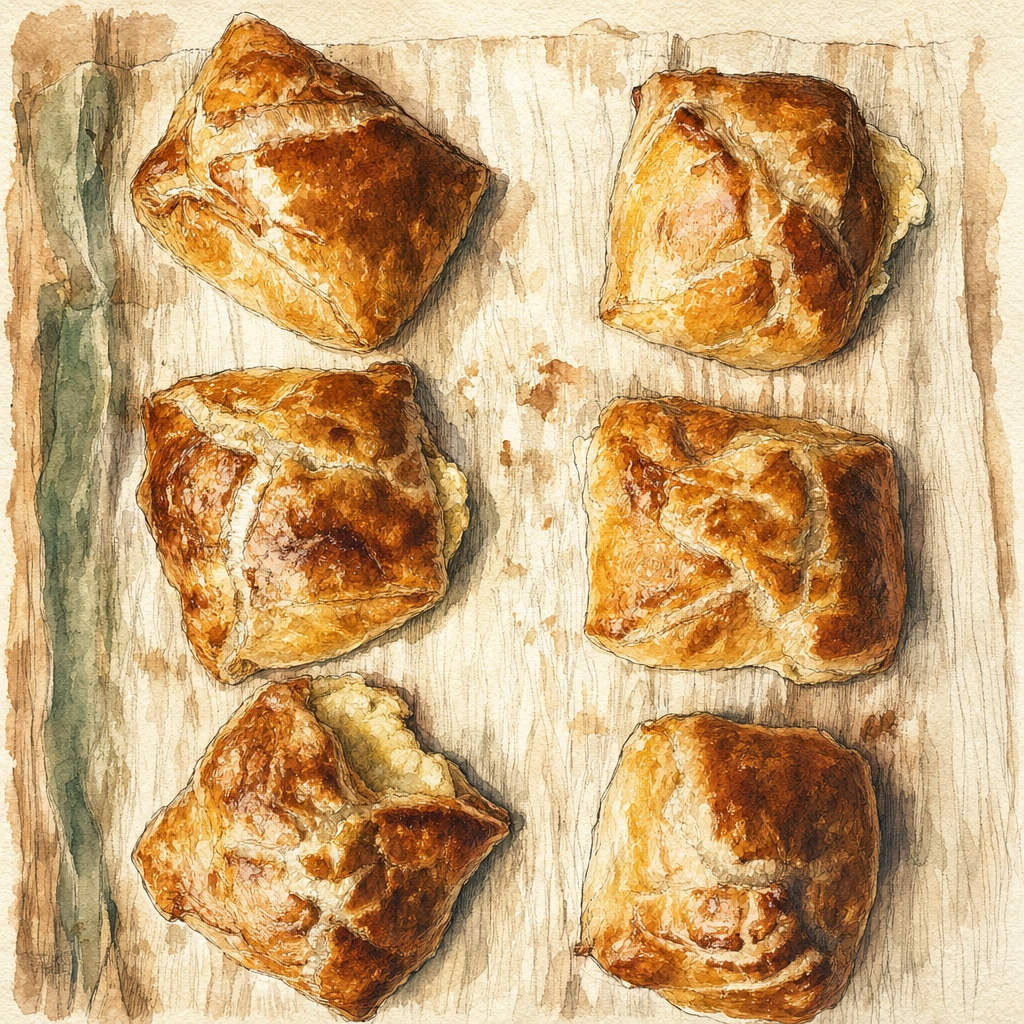
Penovani. Khachapuri made with puff pastry instead of yeasted dough. Folded into a square or triangle around the cheese, baked until the layers separate. Lighter, flakier. Common in bakery counters and stand-up snack places. Great for one person.
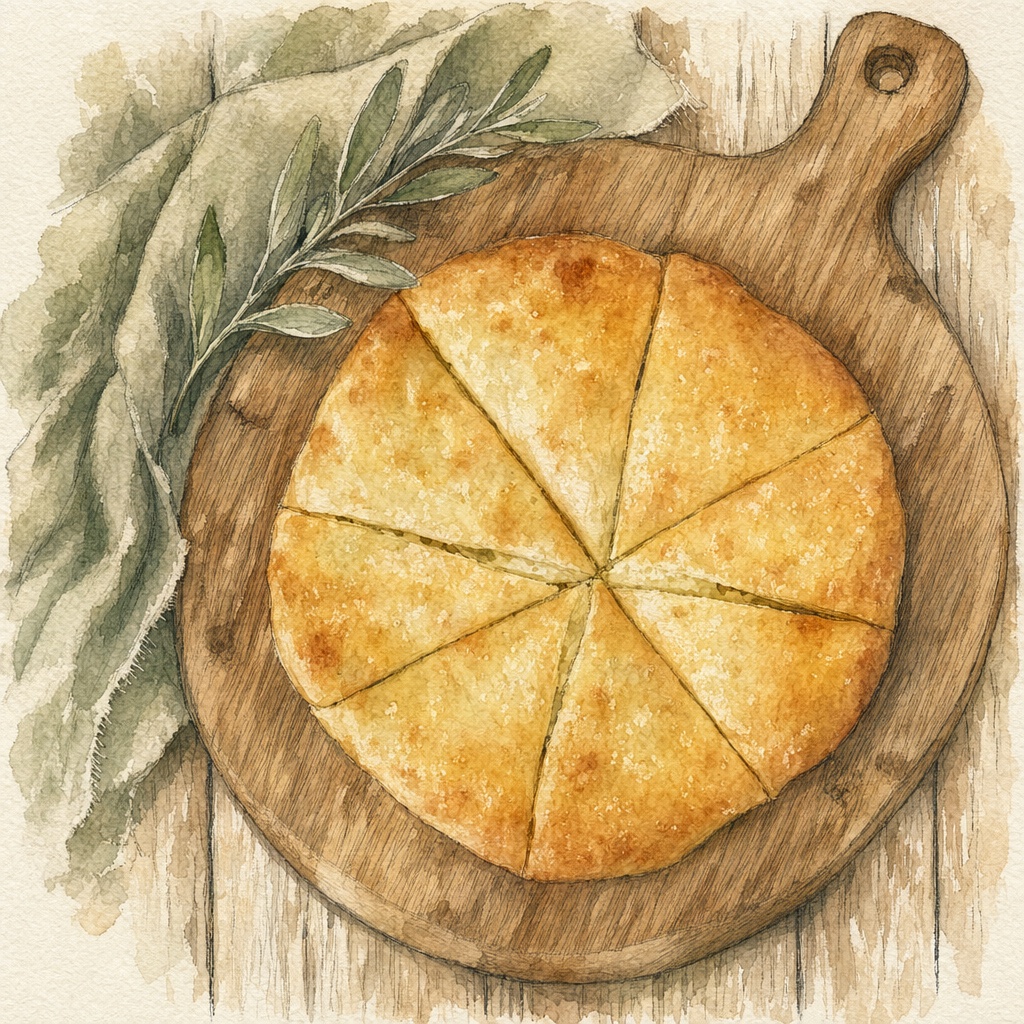
Ossetian (Khabizgina, sometimes also called Ossetian khachapuri). A potato-and-cheese version, originally from Ossetia. Closed flat pie, filled with a mixture of cheese and mashed potato. Heavier than Imeretian, less rich than Adjarian. A workhorse.
There are others (Rachuli with bacon, Achma which is essentially Georgian lasagna), but those five cover most menus.
How to order it
In Georgian, you say erti khachapuri (one khachapuri), plus the type, like erti acharuli or erti imeruli. Most places will know what you mean without further specification, because their menu is usually one or two of the five.
If you only know the word “khachapuri”, you will get the regional default. In Tbilisi this is usually Imeruli. In Batumi, expect Acharuli. In Zugdidi, Megruli is common. The exception is the cafes that explicitly target tourists, where Acharuli is on every menu because it photographs well.
What to drink with it
Hot, salty, fatty bread wants something acidic. Tarragon lemonade is the classic non-alcoholic pairing. With wine, a dry white like Tsinandali or a dry red like Saperavi works beautifully. Locals will sometimes drink chacha or beer with it. Don’t drink water. You will feel full instantly and miss the joy.
A small Georgian-language note
If you are going to eat khachapuri regularly, learn one Georgian sentence: erti acharuli, tu sheidzleba, “one Adjarian, please.” Your reception will instantly improve. The word gemrieli (delicious) is also worth knowing for when the kitchen comes out to ask how it was.
That’s khachapuri. Order one of each over a week, decide which is yours, and start working through the rest of Georgian food from there.