

Georgia has been making wine for 8,000 years. There is archaeological evidence of grape cultivation in the South Caucasus that puts Georgia at or near the top of the list of contenders for “where wine started.” Most Georgians take this fact extremely personally, and they are right to.
What that means in practice is that Georgian wine is its own thing. It does not taste like French wine, Italian wine, or Spanish wine. It uses different grape varieties (over 500 indigenous ones, many still grown), a different fermentation method, and a different cultural relationship to drinking. If you’ve come to Georgia and ordered a generic “house red,” you’ve barely scratched the surface.
This is the short orientation.
The qvevri tradition
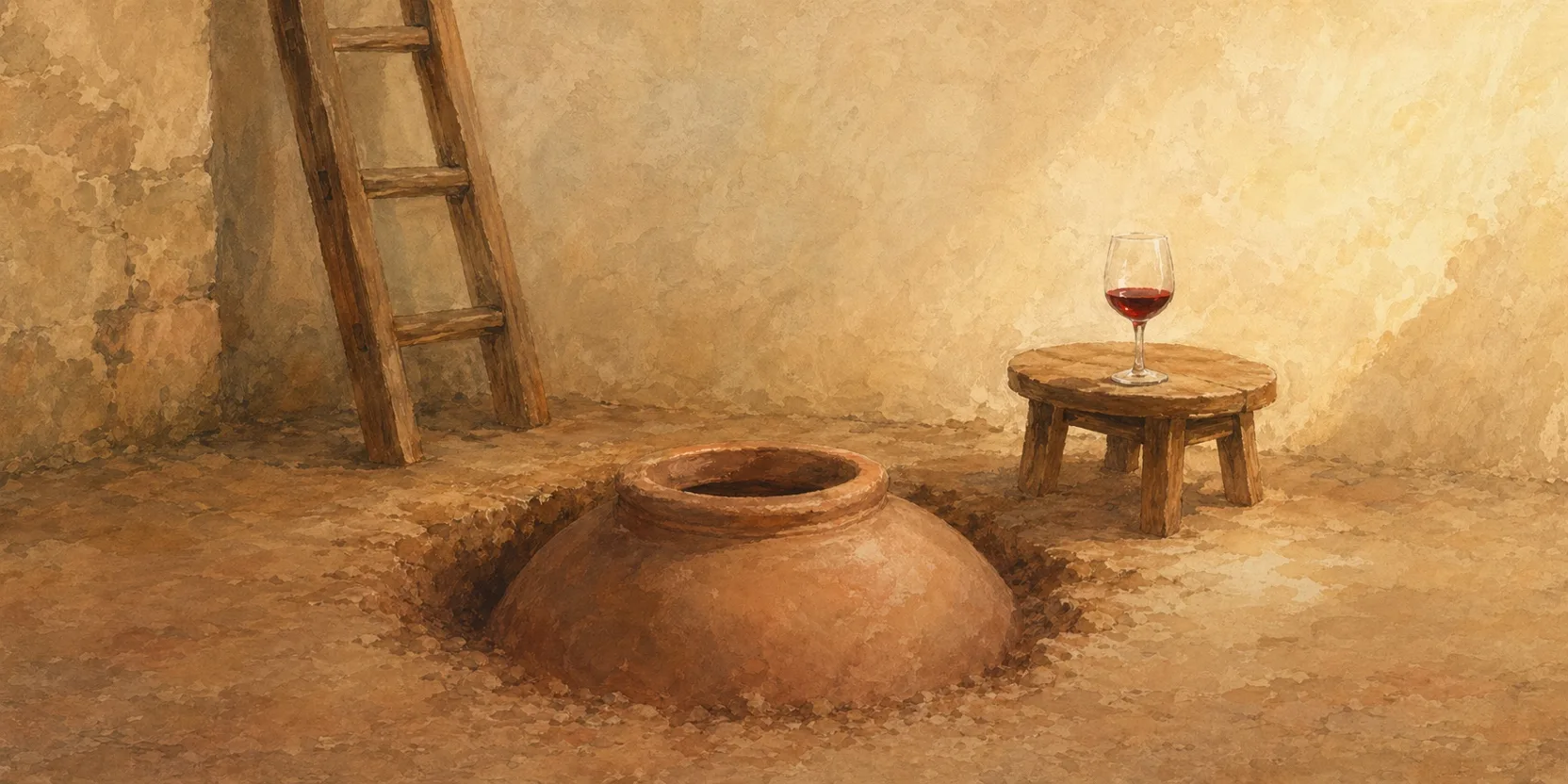
The defining feature of traditional Georgian winemaking is the qvevri: a large, egg-shaped clay vessel buried in the ground up to its neck. Grapes (skins, stems, and all) go into the qvevri to ferment, and the wine ages there for months. The clay walls let microscopic amounts of oxygen through, and the underground temperature stays steady year-round. The result is a wine made differently from anything you’d taste in Europe.
Most modern Georgian commercial wine is made in stainless steel like everywhere else. But the qvevri tradition is alive: small producers, family wineries, and a recent revival movement keep it going. UNESCO listed qvevri winemaking as Intangible Cultural Heritage in 2013. If you see a wine labeled “qvevri” on the menu, that’s what it means.
The two grapes you need to know first
There are dozens of important grape varieties in Georgia. For a starting orientation, two will do.
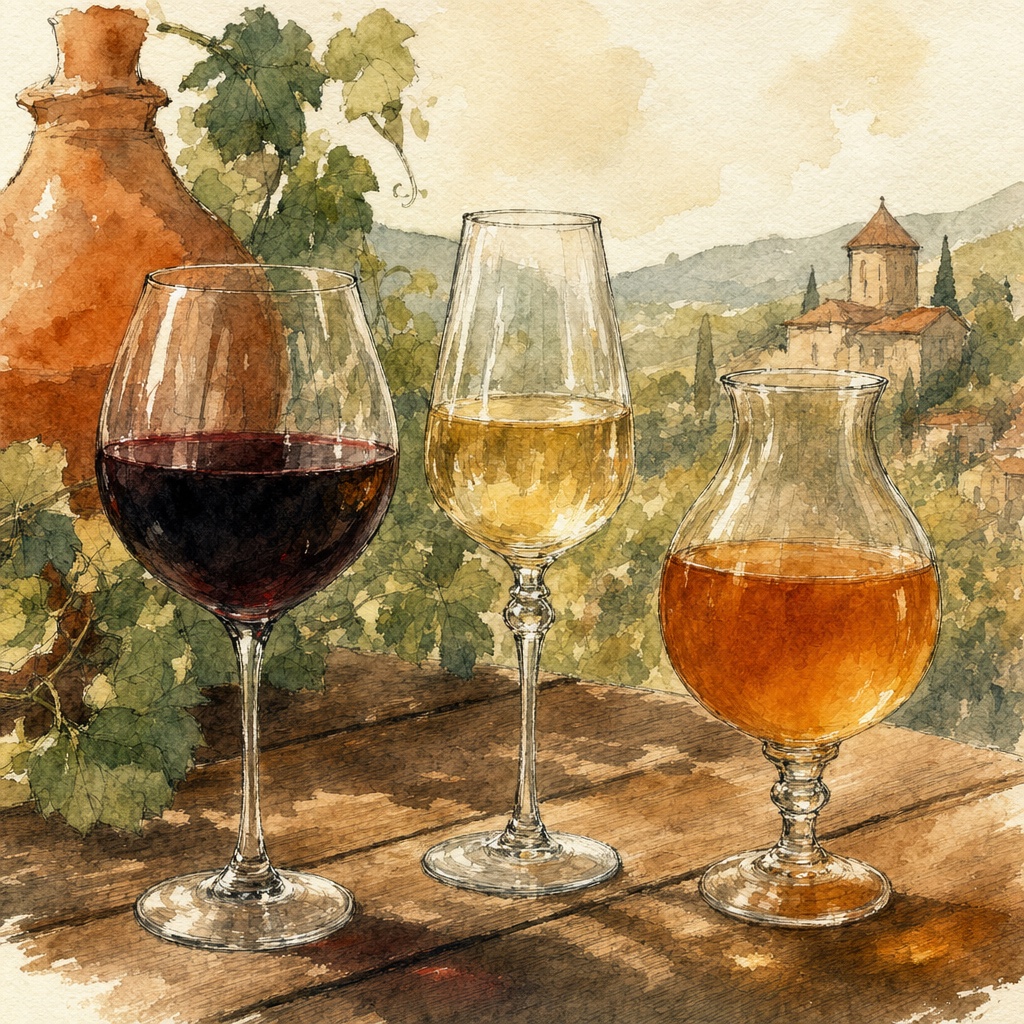
Saperavi. A red grape, used for almost all of Georgia’s serious red wine. The name means “dye” in Georgian, because the grape’s skin and pulp are both deeply pigmented. Saperavi makes a wine that is dark, full-bodied, slightly tart, with notes that vary from cherry to plum to chocolate depending on producer and aging. If you order one Georgian red, order Saperavi.
Rkatsiteli. A white grape, equally widespread. Rkatsiteli has been around for thousands of years and is responsible for both clean modern whites and traditional amber wines. The modern style is crisp and a little floral. The traditional qvevri style (with skin contact) gives you the famous “amber wine,” a white that ferments with the skins and ends up tannic, deep gold, and unlike anything in the western wine canon.
A safe ordering instinct: red, ask for Saperavi. White, ask for Rkatsiteli. From there you can branch out.
Amber wine
This is the one to try if you want to understand what Georgian wine is doing differently. Amber wine is white grapes (usually Rkatsiteli) fermented in qvevri with skin contact. The skins give the wine tannic structure (like a red), color (a deep gold-amber), and flavor complexity that no normal white has. The result is somewhere between white and red, with notes of dried apricot, walnut, and aged cheese.
It pairs beautifully with Georgian food, which it has co-evolved with for millennia. Khachapuri, walnut-stuffed everything, pkhali, chakapuli, all the things on a supra table that don’t quite know what to do with French wine. Order amber wine with them and the meal makes new sense.
Where to drink
In Tbilisi: there’s a wave of natural-wine bars that take Georgian wine seriously and stock small producers (places like Vino Underground, 8000 Vintages, Dadi). These are good first stops for orientation.
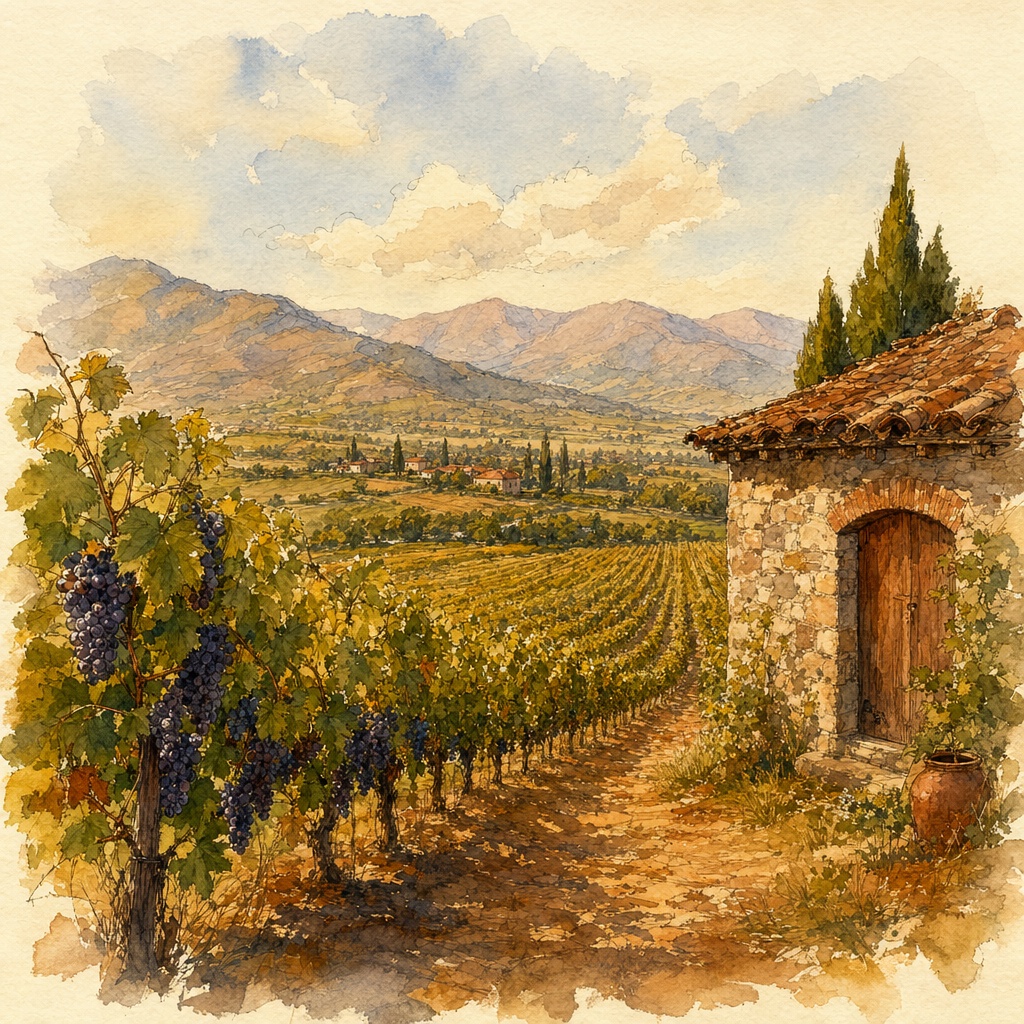
Outside the city: Kakheti is the wine region. A day trip from Tbilisi gets you to Telavi, Sighnaghi, Tsinandali, and dozens of small wineries that will pour you a tasting of their qvevri and modern wines. Wine is taken seriously there in the way bread is taken seriously in France.
A useful rule: at any restaurant in Georgia, ask for “Georgian wine” by region rather than by brand. Kakhetian wine signals you want the classic. Imeretian gets you something fresher and lighter.
A small Georgian-language note
Some words to recognise on a menu or hear at the table:
- ghvino (ღვინო), wine. Pronounced gh-vee-no. The first sound is throaty.
- tsiteli (წითელი), red. tsee-tel-ee.
- tetri (თეთრი), white. teh-tree.
- qvevri (ქვევრი), the clay vessel. kvev-ree. Despite the English “q” spelling, the Georgian word starts with ქ (a regular aspirated k), not the deeper Georgian q sound. The “qvevri” transliteration is a historical convention.
- gaumarjos (გაუმარჯოს), “to victory.” The toast word. Said with every glass raised at the table.
- gemrielia, “it’s delicious.” Useful when the host asks how the wine is.
If you order a Saperavi at a small Tbilisi wine bar, the polite Georgian phrase is erti chika saperavi, tu sheidzleba, “one glass of Saperavi, please.” (Chika is glass. tu sheidzleba is the all-purpose “please” that goes at the end of any request.)
A note on chacha
If you’re at a Georgian table for any length of time, chacha will appear. It’s grape brandy distilled from the pomace left over from winemaking, much stronger than wine, and it shows up for the late toasts. There’s a separate guide on chacha. For now, know that you do not have to keep up with whoever poured it. Polite refusal of a chacha shot is acceptable, especially if you’re driving.
Why Georgian wine is worth the trouble
Most foreign wine drinkers come to Georgia thinking wine is wine. They leave thinking that the entire international wine industry has been narrower than they realised. The varieties, the qvevri tradition, the integration of wine into daily and ceremonial life are all genuinely different.
You don’t need to become an expert. You need to order Saperavi the first time, an amber Rkatsiteli the second time, and notice how each one changes the food on the table. After that, the path opens up on its own.