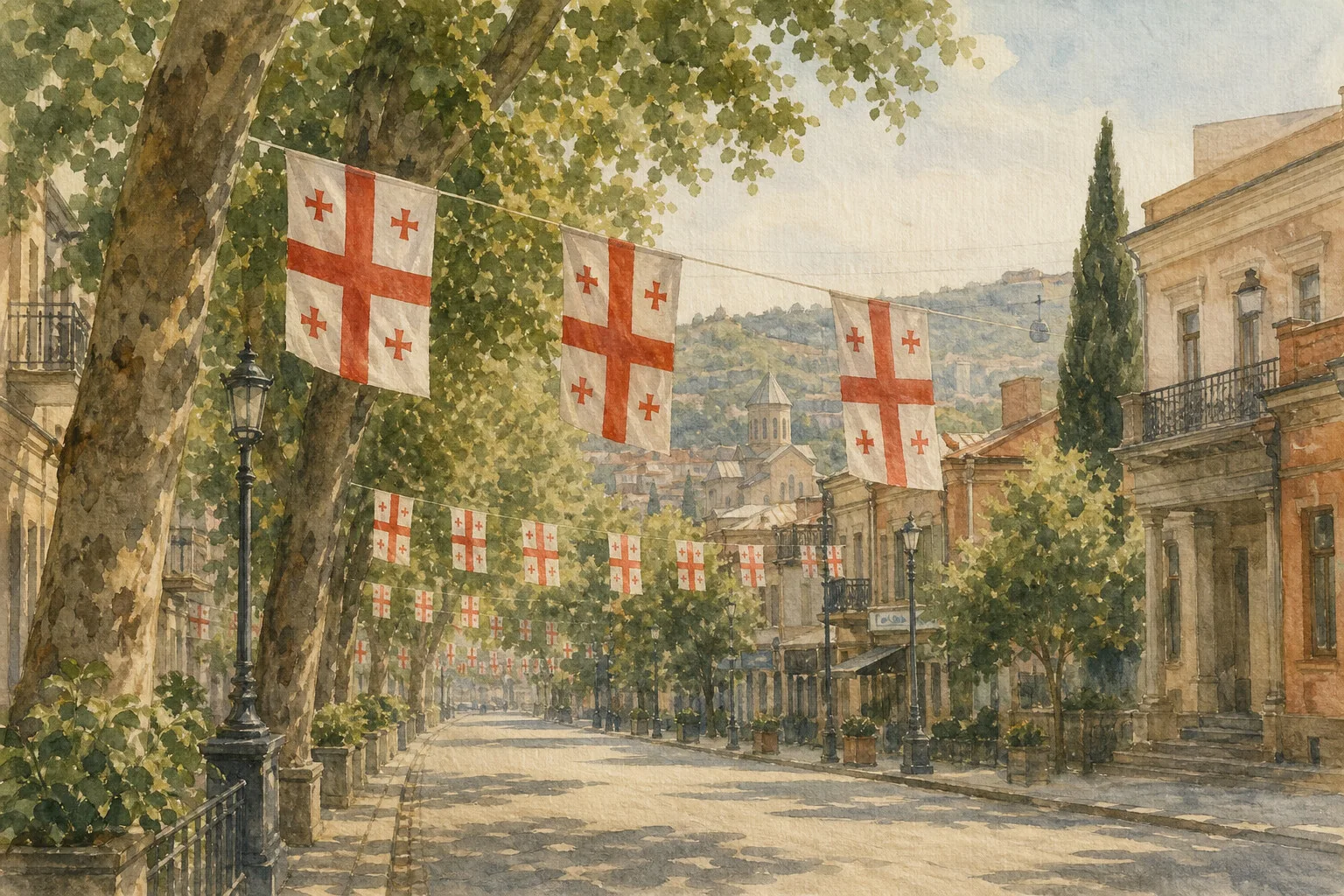

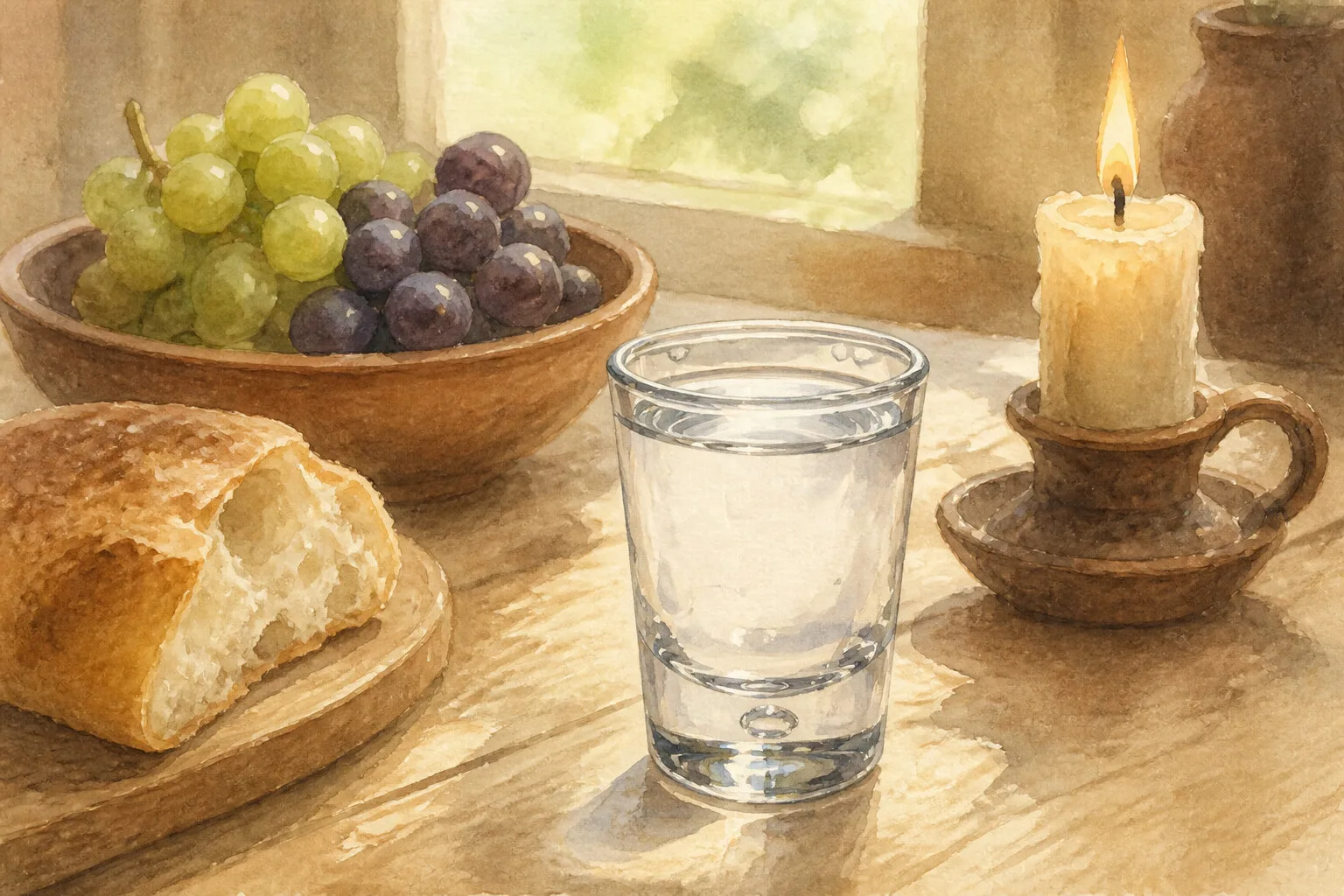

If you spend time in Georgia, sooner or later someone will pour you chacha. It is the country’s grape pomace brandy, made from what is left after the wine is finished, clear and strong. Outside Georgia, people call it Georgian vodka. Inside Georgia, it is just chacha. This is the post about what Georgian chacha actually is, how it is made, and what to expect when it lands in front of you.
What chacha actually is
Chacha is a pomace brandy. The grapes that make Georgian wine leave behind a heap of skins, seeds, and stems once the juice has been pressed and fermented. Most cultures throw that material away. Georgians distill it. The result is a clear spirit with a sharp, aromatic profile, traditionally unaged, and often the strongest thing on the table.
The word chacha in Georgian originally referred to the grape pomace itself, not the spirit. Over time the name moved from the raw material to the drink that came out of it. That is honest in a way that “vodka” and “brandy” are not. Chacha tells you exactly what it was made from.
Commercially-bottled chacha is 40 to 60 percent alcohol. Homemade chacha can run higher, sometimes 70 or 80 percent, depending on whose still it came from. The strength is why it is served in small glasses, around 75 milliliters a pour. One glass is meant to land in a single swallow at a toast, not to be sipped across an evening. That is the format the strength was built for.
How it is made
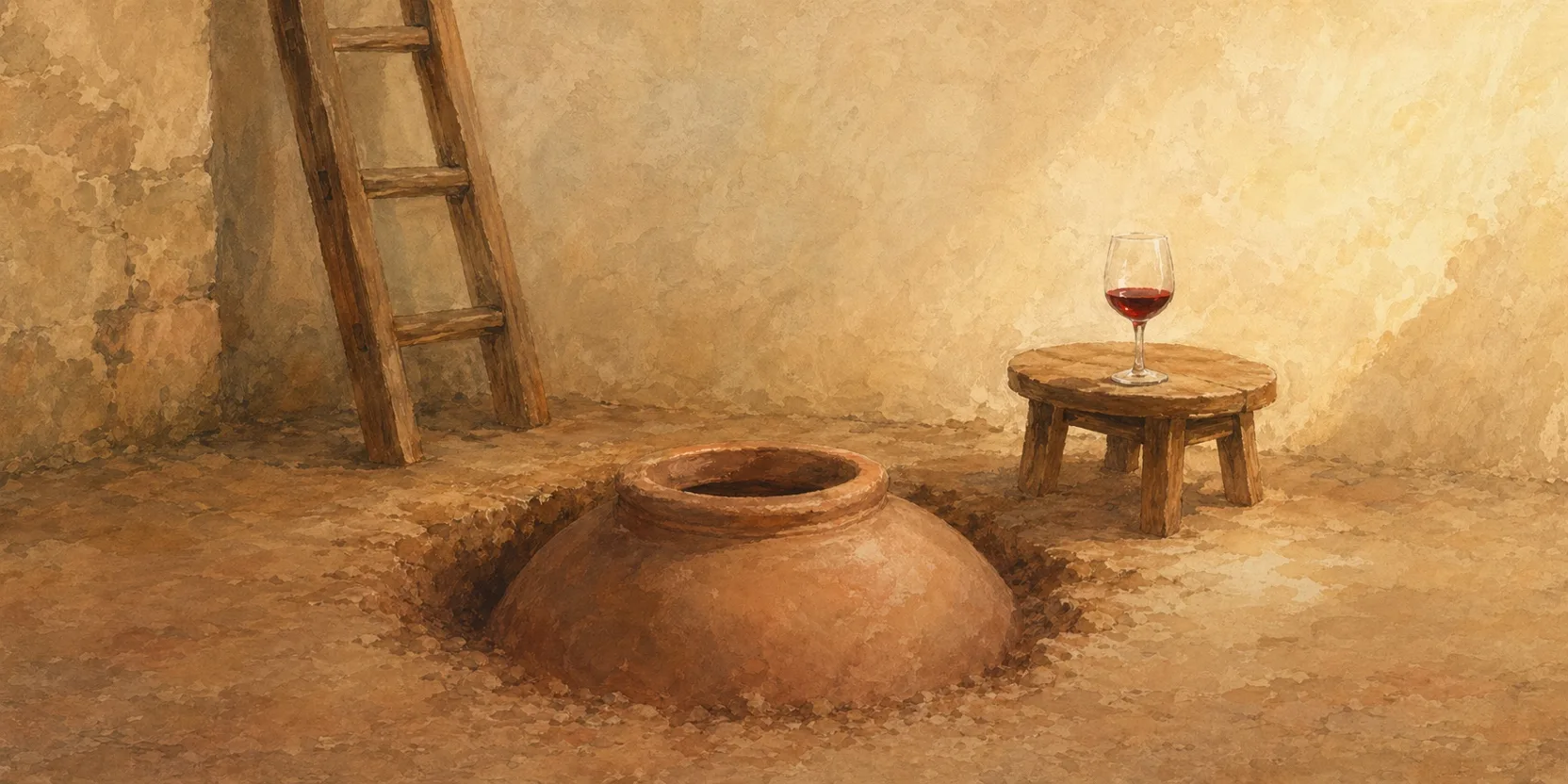
The cycle starts in the autumn. After the harvest, the grapes go into qvevri (the buried clay vessels Georgian winemakers have used for thousands of years) or modern stainless tanks. Once the wine is racked off, the leftover pomace stays. Some families ferment it a second time on its own to release more sugar. Others go straight to distillation.
The pomace is loaded into a still, often a copper or copper-lined vessel, and heated. The alcohol vapor rises, condenses, and runs out as clear chacha. Most Georgian families distill once for everyday chacha and twice for the cleaner, smoother version they save for guests. A small amount is sometimes aged in oak (this is the exception, not the rule, and is most associated with Kakheti, where some producers age chacha in oak barrels to give it a caramel-like color and flavor). The default chacha is clear, sharp, and unmistakably grape.
This whole cycle is connected to qvevri winemaking, which UNESCO recognizes as Intangible Cultural Heritage. Chacha is the part of that heritage you do not see in the wine bottle. It is the second life of the harvest.
Where chacha shows up at a supra
The first thing to know: at a Georgian supra, wine is the dominant drink. Chacha appears alongside it, but it is not the default. Some hosts pour chacha at specific toasts, some bring it out later in the evening, some keep it on the table the entire time as the strong option. Patterns vary by family, region, and occasion enough that any rule you read should come with the caveat that the actual rule at any given table is whatever the host says it is.
What is consistent across most Georgian feasts:
- Drinking follows toasts, not the meal. The tamada proposes a toast, the table raises glasses, the toast continues at length, and then people drink. Drinking continuously through a Georgian meal as you would at a Western dinner is not how a supra works.
- The first toasts are usually to substantial subjects. God, peace, Georgia, the dead, the family, the guests. These are typically wine toasts. Chacha tends to come in for later toasts or for specific moments rather than for the formal opening.
- Glasses are small. A standard chacha pour is around 75 milliliters, drunk in one swallow.
The variance is real and worth keeping in mind. You will find supras where the table sticks to one drink all evening (chacha throughout, or wine throughout) to reduce the hangover. You will find supras with strict rules about which toasts use which spirit, and supras where the host pours whatever is in reach. Treat the patterns above as the typical baseline, not as a script.
How to drink it (and how to refuse)
When the tamada calls a toast, hold your glass at chest height and listen. Do not drink yet. The toast may be short or it may be long. When the speaker finishes and lifts the glass, you lift yours, and you drink.
If someone leans across the table and asks you the formal gindat chacha?, the question is genuine and the bottle is already in their hand. The polite answer if you are happy to drink is minda (I want some) with a small nod. If you want to decline, a smile and madloba (thank you) is enough.
A few things worth knowing:
- The pressure to drink hard falls more heavily on men. A male guest at a supra is more likely to be encouraged to finish each glass and to keep up with the table. Female guests typically have more flexibility to sip lightly or skip toasts. This is a real cultural pattern across Georgian sources, even if individual hosts vary.
- Drunkenness is not the goal. A successful supra runs late and stays warm. Visible drunkenness is considered shameful, especially for the tamada. Going slowly is fine. Being the loudest table is not.
- Small glasses, single swallows. When the toast lands and you drink, drink the glass. Sipping chacha across half an hour reads slightly off because the format is built for the swallow, not the sip.
- Eat first. Bread, cheese, anything before the first toast lands. An empty stomach and chacha is a short evening.
Homemade vs commercial
Most chacha you buy in a Tbilisi shop is commercial. KGM, Sarajishvili, and a number of smaller producers make perfectly good bottled chacha at standard strength. If you are buying chacha to bring home as a gift, this is what you are buying.
Homemade chacha is a different category. It comes from a family still or a village producer, sometimes a neighbor or a friend of a friend. It is unlabeled, often in a reused glass bottle. The quality varies more than commercial. A really good homemade chacha is one of the best spirits you will ever have, and a bad batch is not. The expats who eventually fall in love with chacha often do so because of a homemade bottle.
You do not buy homemade chacha. You receive it, usually as a gift, after a meal where the bottle has already proven itself.
What to bring back as a gift
If you are leaving Georgia and want to take chacha with you:
- At the airport. Tbilisi airport’s duty-free has a chacha section. Sarajishvili and KGM are the safe defaults.
- From a wine shop in Tbilisi. Several wine shops in Vake and Vera carry chacha alongside their wine selection. Ask the staff for a recommendation.
- A clay flask. If the chacha is for a serious gift, look for one bottled in a Georgian ceramic flask. The flask itself is a piece of the gift.
A last word from the table
Outside Georgia, chacha gets reduced to “Georgian vodka”. I understand why. It is the simplest way to put it on a menu in London or Brooklyn. But the framing is wrong. Vodka is a category. Chacha is the second life of the wine harvest, distilled into something the next toast can stand on.
If you are heading to Georgia and want a few words ready for the moments around the table, Speak Georgian in 50 Days opens with greetings, basic table phrases, and the rhythm of how Georgians actually talk through a meal. The first lesson is free. Gaumarjos.