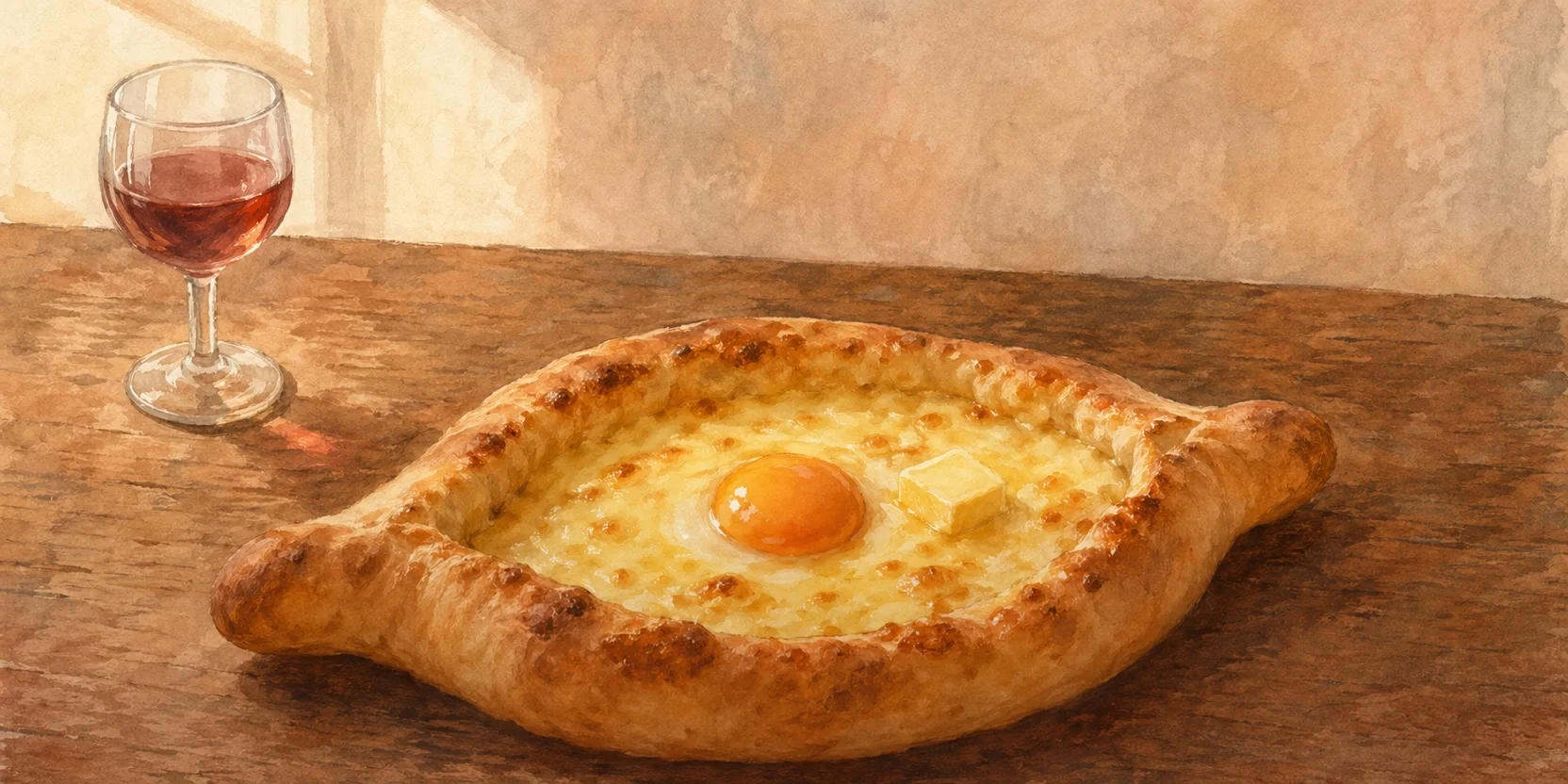

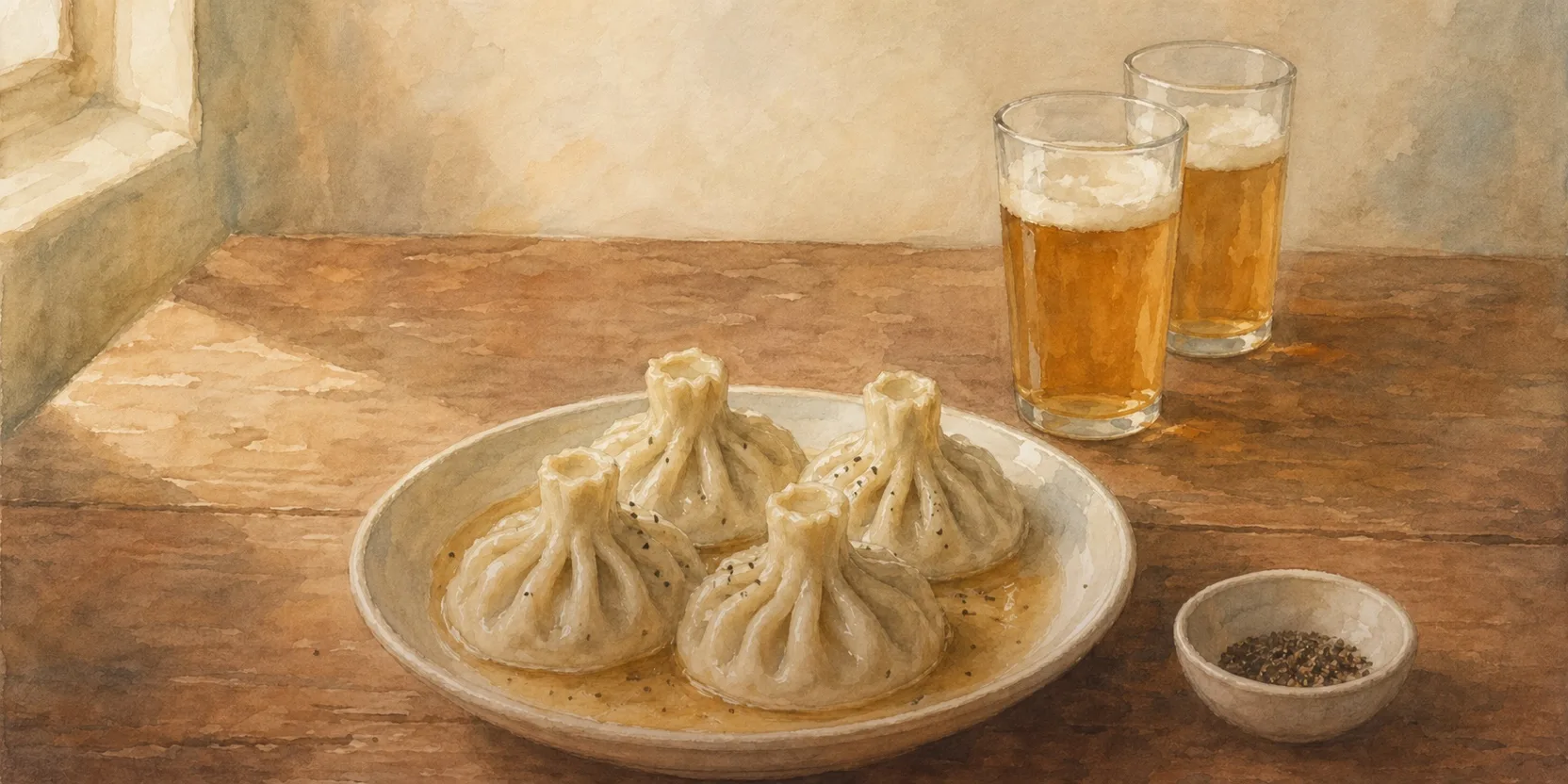

If khachapuri is the dish foreigners post the most pictures of, khinkali is the dish foreigners get wrong the most. They are Georgian dumplings, served in stacks, eaten by hand, and there is a specific technique that the locals will not always explain unless you ask.
This is the short version of what they are and how to handle them.
What khinkali actually are
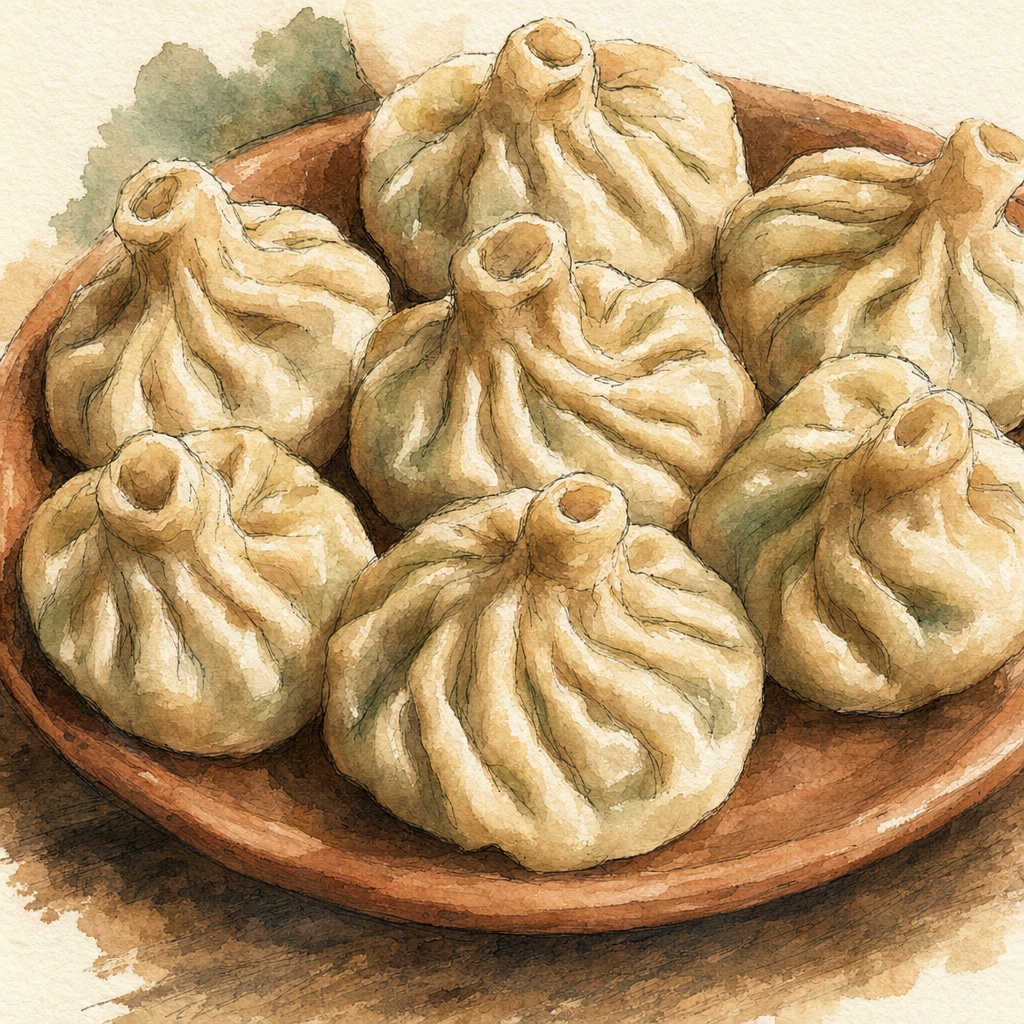
Khinkali are large, twisted, hand-folded dumplings. The dough is a simple flour-and-water dough, rolled out thin and gathered at the top into pleats that meet in a knotted point. The filling is usually spiced minced meat (a mixture of beef and pork, or sometimes lamb), but you’ll also find mushroom, cheese, and potato versions in cities. The defining feature is the broth: every khinkali is filled not just with meat but with a small reservoir of hot, savoury broth that’s released when you bite in.
They originated in the mountainous regions of Pshavi and Khevsureti, where shepherds wanted a portable, complete meal. They’ve since spread across all of Georgia and become a national fixture.
How to order them
You order khinkali by the piece, not by the plate. A normal portion is five or six. Ask for fewer if you are also ordering khachapuri or anything else, because they are denser than they look.
The simple Georgian phrase is eqvsi khinkali, tu sheidzleba: “six khinkali, please.”
If you want to specify the filling: khortsiani (meat), qvelis (cheese), sokos (mushroom), kartopilis (potato).
How to eat them (the part everyone gets wrong)
Khinkali are eaten with your hands. Always. Cutting one with a fork releases the broth onto your plate, and you have just thrown away the entire reason this dish exists.
The technique:
- Pick the khinkali up by the knotted top.
- Bite a small hole in the side, near the bottom of the dumpling.
- Suck the broth out through the hole.
- Eat the rest of the dumpling.
- Leave the knot on the plate.
The knot is structurally important to the dumpling but is also dense, doughy, and not actually meant to be eaten. Most Georgians leave them. Counting the leftover knots at the end of the meal is a casual way to keep score.
Some people pepper their khinkali heavily with black pepper before eating. This is traditional. Try one with pepper, one without, decide.
What to drink with them
Beer or chacha. Both work. Beer is the casual answer. Chacha (the Georgian grape brandy) is the celebratory answer. Neither needs to be expensive. Lemonade also works, especially tarragon lemonade if you find it.
Avoid ordering wine specifically with khinkali. Georgians generally don’t, and the heavier reds will fight the lightness of the broth. Wine is for the supra. Khinkali wants something simpler.
A few common mistakes
- Ordering them at a tourist-trap khachapuri-and-coffee place. Go to a khinklis sakhli (a “khinkali house”), or anywhere that explicitly specialises in them. The dough is everything. Bad dough kills the dish.
- Cutting them with a fork. Don’t.
- Eating the knot. Don’t (unless you really want to, no one will stop you).
- Ordering too many. Five or six is plenty for one person.
- Microwaving leftovers. The broth disappears, the dough goes soggy. The Georgian solution is to pan-fry them the next day, called shemtsvari khinkali. The dough crisps, the meat keeps its flavour, the dish becomes a different (and excellent) thing.
A small Georgian-language note
If you are ordering khinkali every week, two phrases stay useful: kidev rva khinkali, tu sheidzleba (“eight more khinkali, please”), and gemrieli iqo (“it was delicious”), said while leaving the table. Your reception will improve audibly.
That’s khinkali. Walk into the right place, order six, eat them by hand, leave the knots. You’ll never forget the first one done correctly.