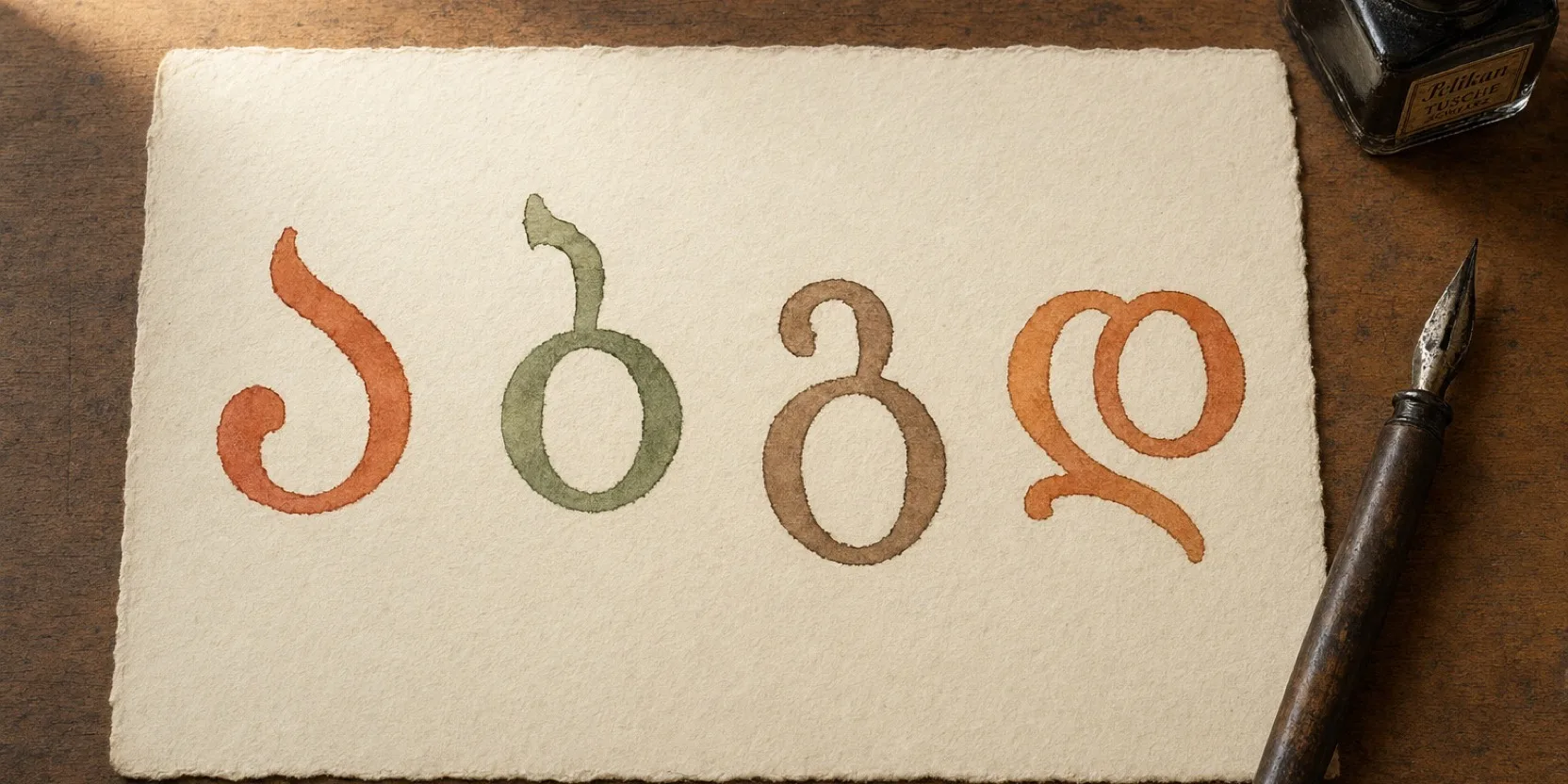



The Georgian word for hello is gamarjoba.
That’s the answer most learners are looking for. Below is the slightly bigger answer with audio on every phrase: when gamarjoba fits, what the time-of-day greetings are, how Georgians ask “how are you,” and the standard way to say goodbye.
The everyday word: gamarjoba
This is what almost every Georgian says when they walk into a room, pass a friend on the street, or open a phone call. Gamarjoba works any time of day, in casual and formal contexts, with strangers and with people you’ve known for years. As a learner you can use it in nearly every situation in your first year and never feel mismatched to the moment.
You will often hear Georgians say gamarjobat. This is a colloquial habit where people add the polite plural -t to the end of the word, the same suffix that marks formal/plural verb endings. Strictly speaking it is grammatically incorrect (the -t belongs on verbs, not nouns), and in genuinely formal settings educated speakers stick to gamarjoba. As a learner you can use gamarjoba everywhere and never feel mismatched.
The literal meaning is closer to victory to you, from the same root as the verb for to win or to be victorious. It’s a deeply Georgian word, tied to a long history of greeting one’s countrymen with a wish for their continued strength. You don’t need to think about that when you say it. The word lands warm regardless of whether the speaker is aware of the etymology.
Greetings by time of day
Georgian also has time-of-day greetings built around the word mshvidoba (peace), in its genitive form mshvidobisa (of peace). The structure is “[time of day] of peace”:
These are slightly more formal than gamarjoba and a bit more situational. You’d use dila mshvidobisa on a quiet morning at the bakery or in an office at the start of the day. Saghamo mshvidobisa fits walking into a restaurant for dinner, or greeting a neighbor in the stairwell after work. None of them replace gamarjoba as the all-purpose greeting. They sit alongside it.
Asking how someone is
The standard follow-up to a greeting is the same in Georgian as in English. After gamarjoba, you ask:
The formal/plural tkven rogor khart (or just rogor khart, since tkven meaning “you” is often optional in spoken Georgian) is what you use with strangers, elders, and most people you’ve just met. The informal rogor khar is for friends, family, and people who’ve already invited you into the second-person singular by using it on you first.
The standard reply, said warmly, is k’argad, madloba, meaning well, thanks. After that the conversation can go anywhere. If you want a fuller breakdown of the thank-you side of this exchange, see how to say thank you in Georgian.
And goodbye: nakhvamdis
When you leave, the standard parting is:
It comes from the verb meaning to see, and the sense is closer to until we meet again than to a final goodbye. Used in nearly every parting, casual or formal. Nakhvamdis alone is the safe everyday choice and works in nearly every context a learner encounters.
When you’ll actually use these
A normal day in Tbilisi is full of these phrases. Gamarjoba at the bakery counter, gamarjoba to the driver as you board a marshrutka, gamarjoba when a friend opens the door. Dila mshvidobisa if it’s quiet and early. Rogor khart once if the moment calls for a real exchange, and k’argad, madloba coming back. Nakhvamdis on the way out.
For a learner, gamarjoba and nakhvamdis together cover almost every greeting situation in the first month. The time-of-day forms add warmth and texture. The how-are-you exchange is what makes a brief crossing feel like a real interaction. The audio course teaches all of these in lesson 2 and weaves them into every dialogue from there.
If you want the audio-course version of all this, Speak Georgian in 50 Days opens with greetings and goodbyes by lesson 2, and the first lesson is free.