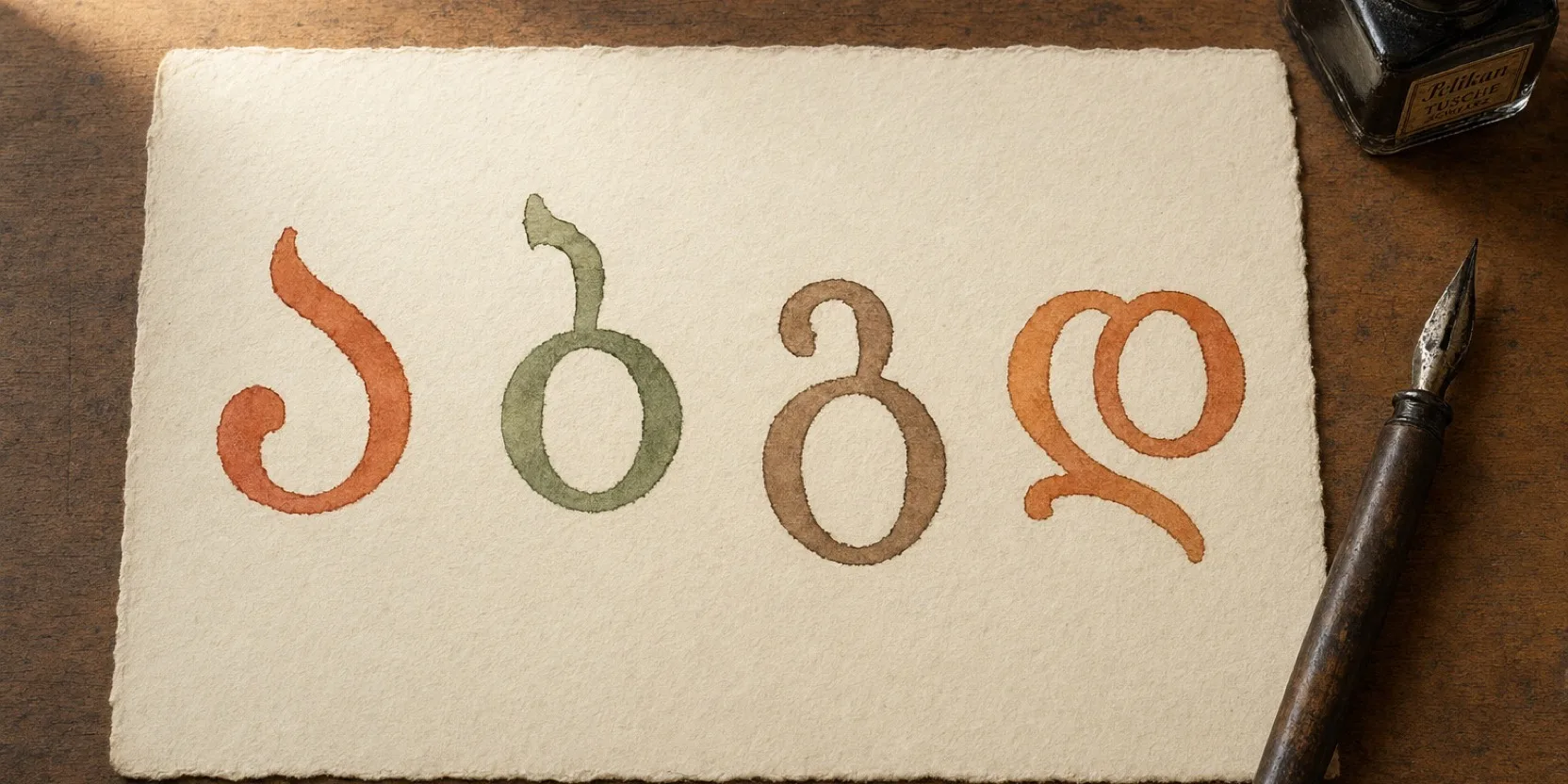



The Georgian word for thank you is madloba.
That’s the answer most learners are looking for. Below is the slightly bigger answer, with audio on every phrase: when madloba fits, how to make it bigger, what the reply is, and a couple of situational variants worth having ready.
The everyday word: madloba
This is what almost every Georgian says in real spoken life. At the bakery counter, in a taxi, when the host pours your wine at a supra, when the cashier hands you change. Madloba covers it. It is polite enough for nearly every situation a learner encounters in the first year, including formal ones.
You will also hear gmadlobt (გმადლობთ), a polite verbal form that means “I thank you.” Cashiers say it back to customers, strangers use it on the street, older Georgians often default to it in formal exchanges. As a learner, you don’t need to produce gmadlobt in your first year, but recognize it when you hear it. Madloba covers everything you’ll need to say.
The audio course introduces it in lesson 2. By the end of the first week of audio, most learners have heard it dozens of times in different shapes.
Saying it bigger: didi madloba
When you want to thank someone more emphatically, put didi (big) in front:
This is what you say after a meal someone has cooked for you. After a host’s hospitality at a supra. After a favor a Georgian friend has done. After a Georgian stranger has gone out of their way to help with directions, which is something that happens often.
If you want to push it even further, add dzalian (very) in front of didi:
This is the version for genuinely big things. Be careful not to deploy it for small ones. Madloba alone is correct for almost every minor courtesy, and using dzalian didi madloba every time you get change at the counter sounds a bit theatrical. Save it for the moments that earn it.
Thanks for a specific thing
Georgian uses the postposition -tvis (for), which attaches to the genitive case of the noun. So sach’meli (food) becomes sach’mlis in genitive, then -tvis is added on top: sach’mlistvis. The grammar feels heavy on the page. In practice you hear it as a single chunk.
Most learners will not produce these forms in their first month, but you’ll hear them often enough that recognition is useful. After a Georgian dinner, madloba sach’mlistvis or simply didi madloba to the host is the standard close.
And the reply: arapris
When someone thanks you, the standard reply is:
Same structure as Spanish de nada or French de rien in spirit. Arapris is the most common Georgian equivalent, and you’ll hear it constantly.
When you’ll actually use these
If you live in Tbilisi or visit Georgia, you will say madloba dozens of times a day. The bakery on the corner, the cashier at the supermarket, the taxi driver, the man selling tomatoes at the bazari, the host pouring your wine at a supra. The number of small kindnesses that pass through a normal day in Georgia is part of what gives the country its texture, and madloba is the word that closes each one.
For most learners, recognition comes from the audio course in the first week and active production starts the same week. The phrase is short, easy to pronounce, and the situations to use it in are everywhere. Within a month it will be coming out of your mouth without thought.
If you want the audio-course version of the rest of Georgian’s everyday courtesies, Speak Georgian in 50 Days threads them through the first ten lessons. The first lesson is free, and madloba shows up as the standard sign-off across the conversational dialogues from lesson 2 onward.