

I moved to Tbilisi from Denmark in 2021. The cost of living was the first thing my friends asked about, and the answer has shifted twice since then. The data sites still quote 2022 numbers. The reality on the ground in 2026 is meaningfully more expensive than they admit, and meaningfully cheaper than any major Western European city. This is the version I would give a friend over coffee: real ranges, real neighborhoods, real bills. The cost of living in Tbilisi is one of the strongest reasons to come, but go in with current numbers, not 2022 ones.
Quick answer: what a month in Tbilisi costs in 2026
The headline numbers, by lifestyle tier:
| Category | Budget | Comfortable | Generous |
|---|---|---|---|
| Rent (central 1BR, furnished) | $400-$600 (outer districts) | $700-$1,200 (Vake / Vera) | $1,500-$2,500 (premium) |
| Groceries | $150-$250 | $250-$400 | $400-$600 |
| Eating out + coffee | $80-$150 | $200-$400 | $500-$900 |
| Transport (no car) | $25-$50 | $60-$120 | $150-$250 |
| Utilities + kvartplata | $40-$60 | $60-$100 | $100-$180 |
| Gym + extras | $30-$60 | $80-$150 | $200-$400 |
| Total per month | $725-$1,170 | $1,350-$2,370 | $2,850-$4,830 |
For a comfortable single life in a central neighborhood, plan on $1,500 to $2,500 a month all in. A budget life is genuinely doable on under $1,200. A generous life with a Vake apartment, regular dinners out, and gym membership lands closer to $3,500.
Couples and families scale roughly with rent and groceries. A couple sharing a comfortable life is usually around $2,500 to $4,000. Families add on schooling, childcare, and a car if they want regular trips to the regions.
Rent: the biggest variable
Rent dominates the budget, and it has moved more than any other line item.
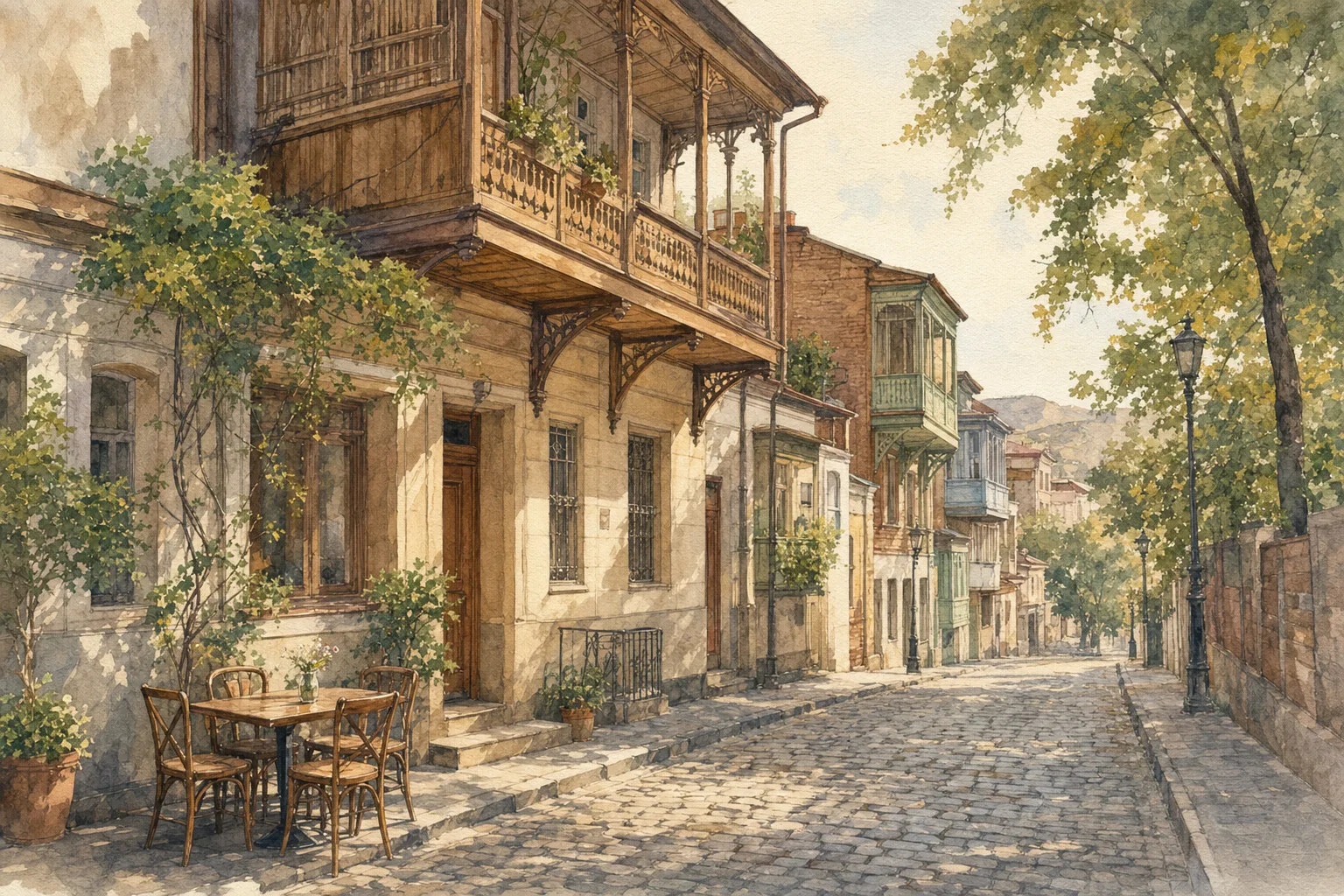
Vake is the most expat-friendly neighborhood, walking distance to Vake Park and the embassy district. Vera is similar in feel, slightly older, more Tbilisi-character. Sololaki is the historic core with old wooden balconies and uneven streets. A furnished one-bedroom in any of those three runs $700 to $1,200 a month in 2026 for something decent. Cheaper if you take a fifth-floor walk-up with no view, more for a renovated place with a Mtatsminda balcony.
Saburtalo, Didube, and the outer parts of Isani are where the same square meter costs less. A one-bedroom around $400 to $600 is realistic there. The buildings are often newer, the streets are wider, the metro reaches them, and the trade-off is character: less old-Tbilisi, more standard-block apartment living. Plenty of long-term residents prefer it for exactly that reason.
Two patterns the data sites miss. First, monthly Airbnbs run 20 to 30 percent above the same apartment on a one-year lease, so anyone planning to stay should sign a real contract early. Second, “furnished” in Tbilisi means everything: kitchen, washing machine, dishes, cutlery, sometimes even bedding. Empty apartments exist but the market has shifted toward fully turnkey.
Food and groceries
Local produce is the best deal in the city. Tomatoes, cucumbers, eggplants, herbs, walnuts, cheese, bread, all genuinely cheap and genuinely good. A weekly grocery run for a single person eating mostly at home, mixed between local produce and a Spar or Carrefour for everything else, lands around $50 to $80 a week. That covers a weekly $200 to $400 grocery bill for one person, depending on diet.
Imported items shift the math. Fancy olive oil, hard cheeses, branded breakfast cereals, anything from the Spar import section, cost roughly Western European prices. A bag of imported coffee is $15. A bottle of imported gin is $25. If your daily diet is heavy on imports, your grocery bill doubles fast.
The local markets, especially Dezerter Bazaar and the Vake market, are where the per-kilo prices look most striking. A kilo of tomatoes in season runs around 4 to 6 GEL (roughly $1.50 to $2.30). A kilo of beef around 25 to 35 GEL ($9 to $13). Half the city shops there.
Eating out and coffee
A khachapuri at a casual Georgian place runs $3 to $6 depending on the size and the neighborhood. A glass of decent Georgian wine in a wine bar is $4 to $7. A serious dinner for two with starters, mains, and a bottle of wine lands at $30 to $60.
Specialty coffee in central Tbilisi has gone up sharply since 2022. A flat white at a third-wave cafe in Vake or Vera runs 12 to 18 GEL ($4.50 to $7), which is comparable to a London or Berlin cafe in absolute terms. A regular Georgian-style espresso at a corner cafe is closer to 5 GEL ($2). The gap between the two is wider than anywhere else in the city.
Wolt and Bolt Food cover most of the central districts. A standard delivery order, a main and a side, runs $8 to $15 with the delivery fee. Wolt has the better restaurant selection. Bolt Food often has slightly cheaper prices on the same items. Both are popular with the expat crowd, used for convenience rather than savings, and the math feels close enough to Western prices that you stop thinking about it.
Transport
Most expats in central Tbilisi don’t own a car. Bolt and Yandex rides cover almost everything inside the city. A typical cross-town ride is 8 to 15 GEL ($3 to $6) in 2026, sometimes a little more during peak hours. The metro is twenty cents a ride and goes from Saburtalo through the center to Avlabari and beyond. Buses and minibuses (marshrutkas) cover what the metro doesn’t, at similar prices to the metro.
For trips outside Tbilisi, a marshrutka to Kazbegi, Borjomi, or Mtskheta runs around 15 to 25 GEL ($6 to $9) one way. They leave from Didube station and from a couple of smaller spots. They don’t run on a precise schedule and a phrase or two of Georgian helps with the driver.
Owning a car in Tbilisi makes sense if you travel often to Kakheti, Adjara, Svaneti, or Kazbegi, or if you have a family. Used cars hold their value reasonably well. Petrol in 2026 runs around 3 GEL per liter ($1.10), well below Western European prices and comparable to or cheaper than the US after a few years of climbing American pump prices.
Utilities and bills
Apartment bills are the line item that surprises new residents most. There are usually four:
- Electricity: $15 to $40 a month for a one-bedroom, depending on AC use and how many devices are running.
- Gas: $5 to $15 a month in summer, $40 to $80 in winter because most apartments heat with gas.
- Water: $5 to $10 a month, flat-rate in many buildings.
- Kvartplata (the building maintenance fee): $5 to $20 a month depending on the building. This covers the entrance, the elevator, the cleaning of common areas. New buildings charge more. Old Tbilisi buildings sometimes charge almost nothing.
Add internet on top: $10 to $40 a month for fiber from MagtiCom, Silknet, or Caucasus Online, depending on tier. The top-tier plans run around 100 GEL a month and are the ones most remote workers go for. The connections are reliable and fast, which is part of why Tbilisi has such a strong remote-work scene.
Total monthly utilities for a comfortable one-bedroom: $40 to $80 most of the year, $80 to $150 in the coldest months of winter. Apartments with poor insulation push higher. Apartments with radiators connected to a building boiler push lower because the cost is rolled into the kvartplata.
Health, fitness, the small stuff
Private health insurance through a Georgian provider runs $20 to $60 a month for a single person depending on the plan. The public hospitals are functional, the private ones in Tbilisi (MediClub Georgia, Aversi, New Hospitals) are modern and far cheaper than equivalent care in Western Europe. A specialist visit out of pocket is around $30 to $50.
Gym memberships at standard neighborhood gyms run $30 to $80 a month. Premium clubs with a pool, classes, and a sauna push toward $150 a month or above. Yoga and pilates studios charge $10 to $20 per drop-in class.
Phone plans are cheap. A standard Georgian SIM with unlimited calls and 30+ GB of data costs $10 to $20 a month from Magti, Beeline, or Cellfie. There’s no real reason to keep a foreign plan unless you’re roaming for short visits.
How fast is Tbilisi getting more expensive
The most common mistake new arrivals make is reading numbers from articles that haven’t been updated since 2021 or 2022. The city has gone through two waves of climbing prices since.
The first was the 2022 arrival of Russian, Belarusian, and Ukrainian relocants after the invasion. Tbilisi’s central rental market roughly doubled in dollar terms inside a year. Cafe prices crept up. Some Georgian-owned businesses pivoted to a higher-spend customer base.
The second is the ongoing arrival of global remote workers, particularly Western digital nomads. They have less concentration in specific neighborhoods than the 2022 wave, but they are pushing premium-segment prices up: third-wave cafes, fitness studios, co-working spaces, organic groceries.
Day-to-day for a long-term resident, the climb has been bearable. Local groceries from the markets are still cheap. Bolt is still cheap. Casual Georgian food is still cheap. The gap between the cheap layer and the imported-premium layer has widened, and a comfortable expat life today touches both.
What you save by speaking some Georgian
The honest answer is that you can live in central Tbilisi for years on English alone, and many people do. Restaurants, shops, banks, doctors, and most landlords speak enough English to function.
What changes when you have some Georgian:
- Markets. Producers at Dezerter or any neighborhood bazaar sometimes quote a foreigner price first. A few sentences of Georgian and the price comes back closer to what a local pays. Not always. Often enough to matter on a regular basis.
- Landlords and builders. The conversation gets faster, more specific, and more flexible. Negotiating a year-long rental in Georgian, even badly, lands differently than the same conversation in English with a translator.
- Outside Tbilisi. In Kakheti, Adjara, the regions, English thins out fast. A few sentences open up real conversations with people who would otherwise just smile and pour you wine. The country gets bigger.
If you’re moving to Tbilisi for any length of time, learning some Georgian is one of the highest-return uses of your first few months. Not for the language sake alone, though that matters too, but because the city opens up in ways that English alone won’t reach. A handful of phrases gets you started, and the audio course goes deeper. We built EasyGeorgian for exactly this kind of learner: someone who is here, or coming here, and wants the audio-first version of the language fast.
The first lesson of Speak Georgian in 50 Days is free. If you’re already planning the move, that’s where to start.